At Iris Aisle, table layouts and reception flow are meant to support how you want your wedding day to feel. Connected, relaxed, celebratory, and true to you.
This guide walks through common layout options, guest count considerations, and how couples often move through our space from ceremony to dinner to dancing. These are starting points, not rules. We encourage you to use what resonates and adapt the rest. There is no single “right” setup
How To Choose Your Layout
Your table layout shapes how guests experience dinner, conversation, and movement throughout the evening. Before choosing a specific setup, we recommend thinking about how you want the night to unfold.
Some layouts encourage long, shared conversation. Others leave more space for mingling, dancing, or movement between indoor and outdoor areas.
Consider:
Your guest count
Seated dinner, buffet, food truck
Whether you want intimate conversation or open movement
Accessibility and comfort for guests of all ages
How much time you plan to spend indoors vs outdoors
You don’t need to have this perfectly figured out, these questions simply help guide the decision.
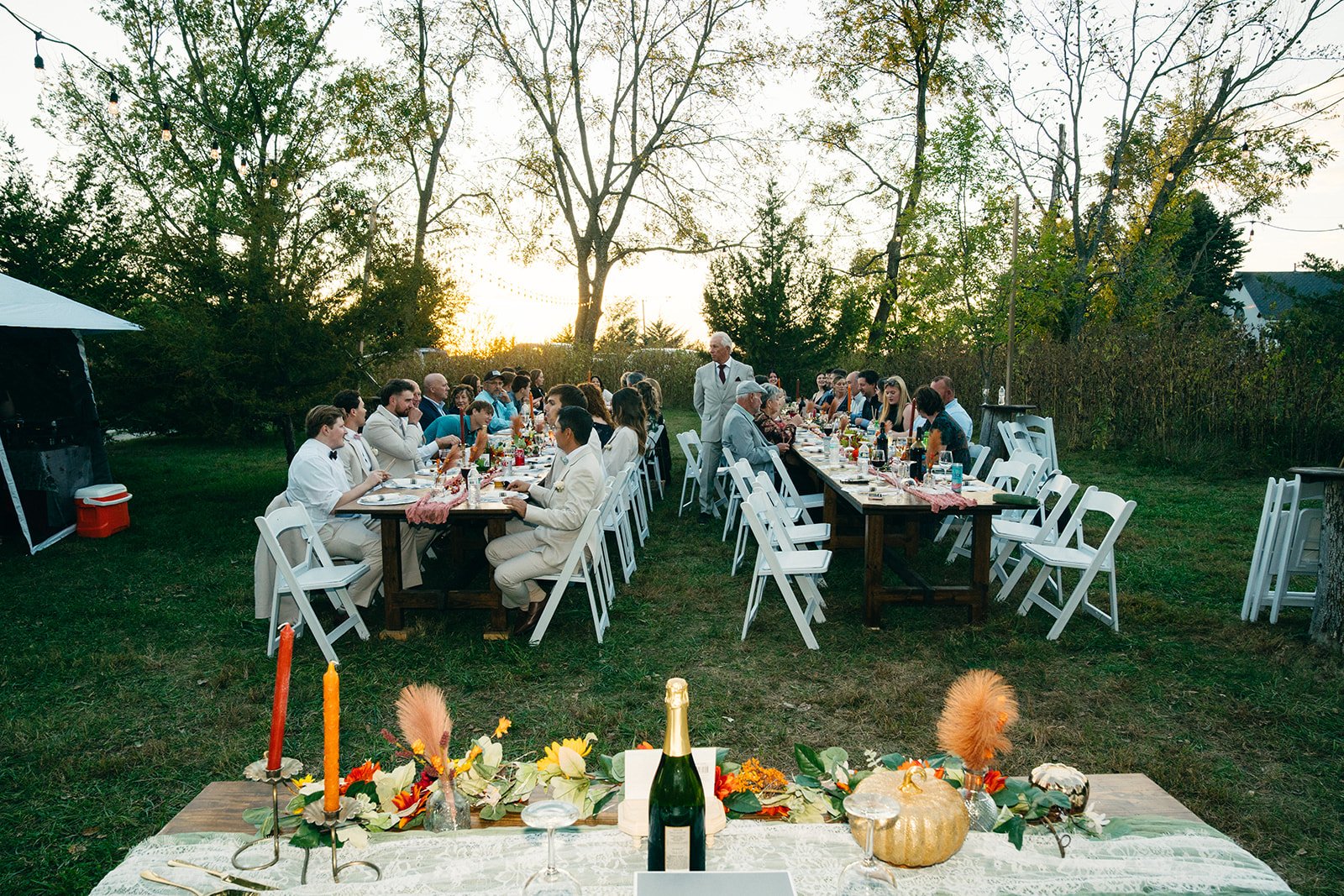
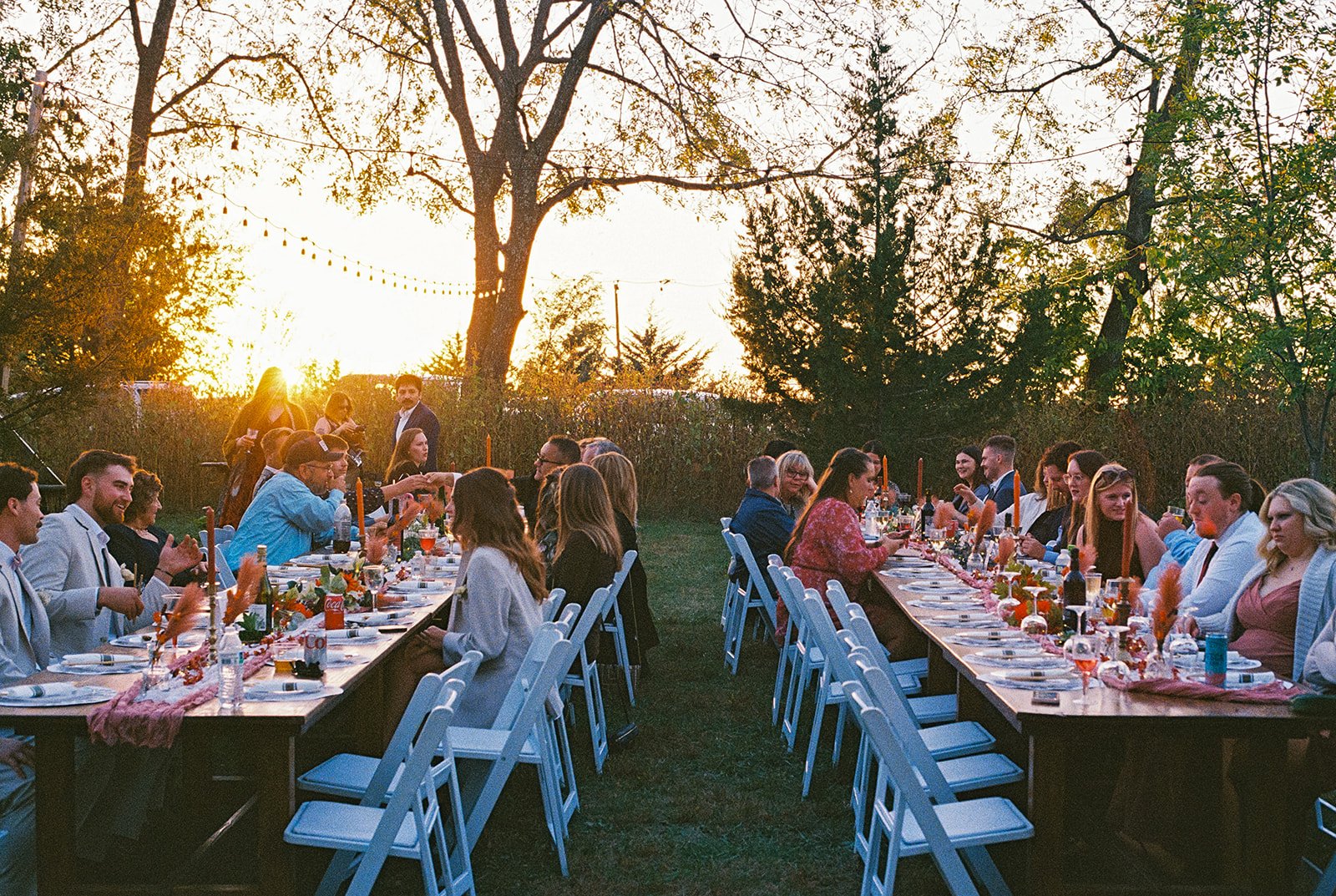
Iris Aisle includes 10 eight-foot farm tables and 2 six-foot tables, which are arranged differently depending on guest count, season, and how couples want the evening to flow. In most layouts, one six-foot table is reserved as a head table for the couple, while the remaining tables are used for guest seating. Rather than locking into a single setup, couples typically anchor dinner outside of the conservatory and allow the reception to spread naturally across indoor and outdoor spaces.
20–30 Guests
Typical table use:
3–4 eight-foot farm tables
1 six-foot head table
Notes:
Allows generous spacing and easy movement. Couples often keep additional tables open for dessert, gifts, or flexible use.
30–45 Guests
Typical table use:
5–6 eight-foot farm tables
1 six-foot head table
Notes:
Comfortable seated dinner with room for buffet service or secondary gathering areas.
45–60 Guests
Typical table use:
7–9 eight-foot farm tables
1 six-foot head table
Notes:
The outdoor spaces typically anchors dinner, while the conservatory supports dancing and mingling.
60–75 Guests
Typical table use:
All farm tables
(10 eight-foot + 1 six-foot head table, plus one remaining six-foot table as needed)
Notes:
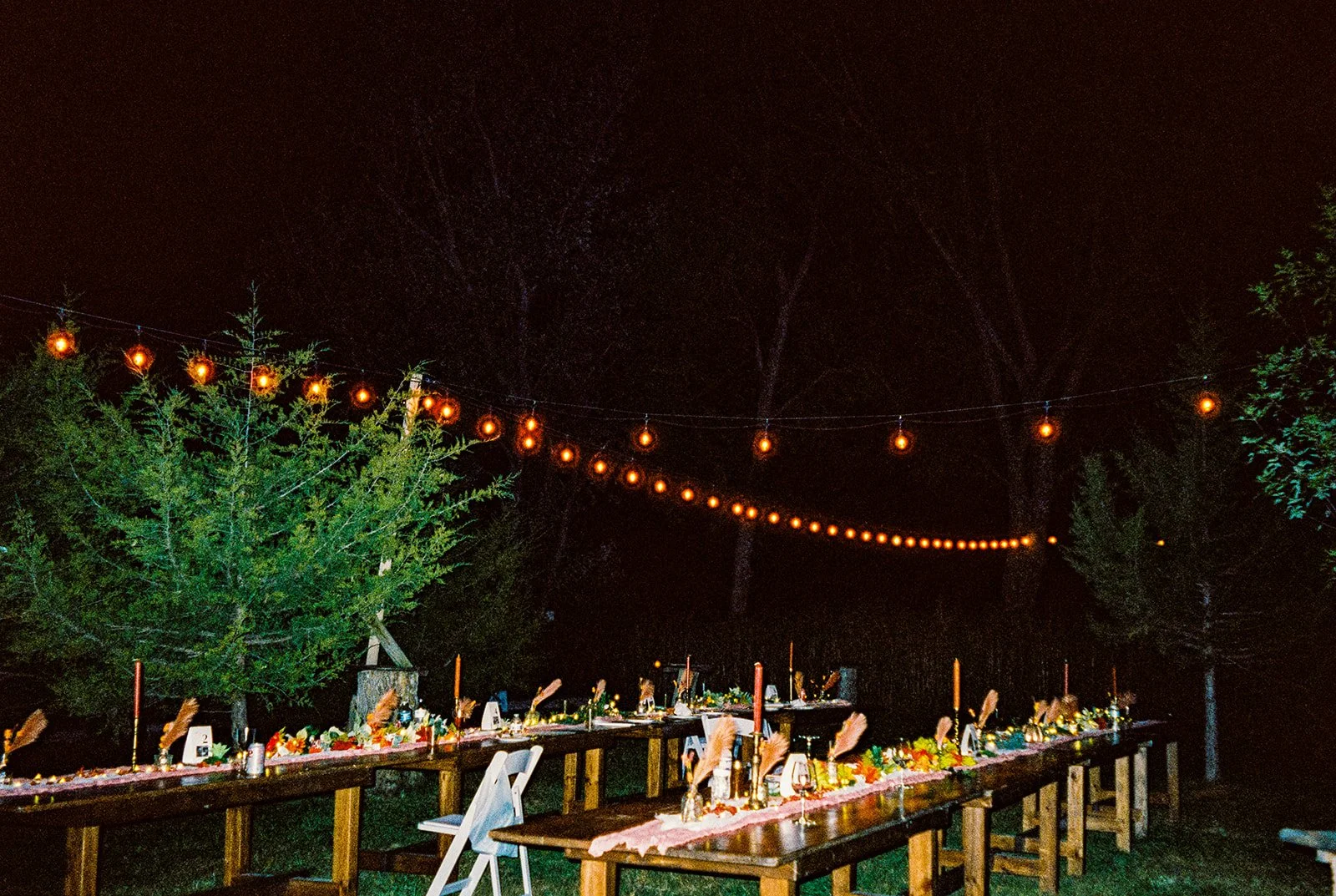
Can be set up inside our outside. The large grass area with the small round tree tables is often used with the max number of guests.
Most couples choose to dance inside the conservatory, where the music and shared energy feel lively and collective.
The concrete reception area on the north side offers a complementary option. With windows open, guests can still see and hear the celebration without being fully immersed, creating space for conversation, cooling off, or simply enjoying the music from a quieter distance.
This balance allows guests to engage in the reception in the way that feels best for them.
Indoor Reception Layouts
Layout: One Long Farm Table
Typical seating: 20–40 guests
This layout creates a long, shared table that encourages conversation and connection throughout dinner. It works especially well for smaller guest counts and intimate celebrations.
Why couples love it:
It feels communal, cozy, and visually stunning under the conservatory lights.
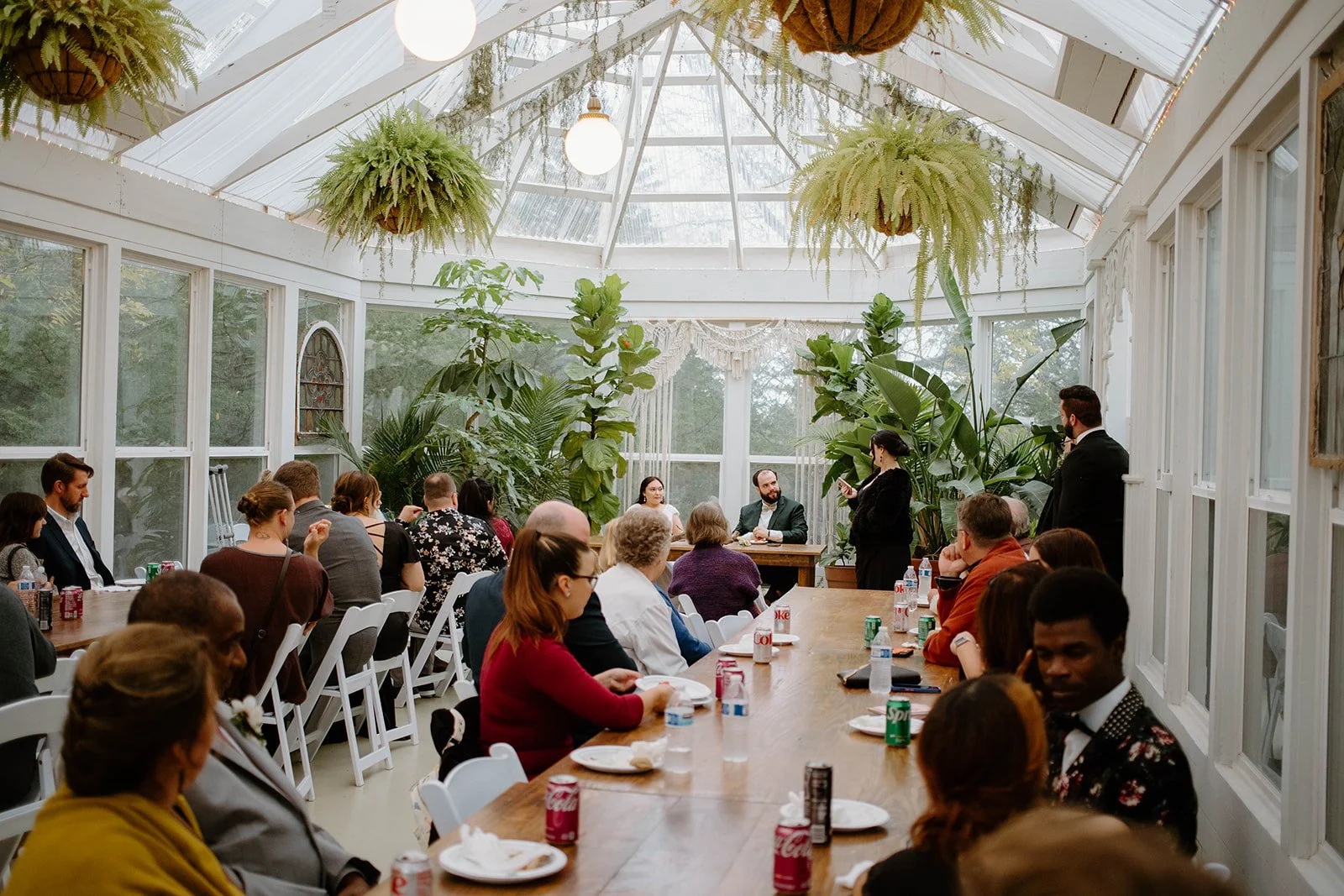
Parallel Farm Tables
Typical seating: 35–60 guests
Head table: Six-foot table placed in the octagon end of the conservatory
Five - seven 8ft farm tables run parallel along the conservatory windows, leaving a clear open aisle through the center of the space. The head table is positioned at the octagon end, creating a natural focal point without closing off the room.
Gaps are intentionally left between the head table and the guest tables, as well as through the center aisle, allowing easy access to the side hallway and maintaining comfortable movement throughout dinner.
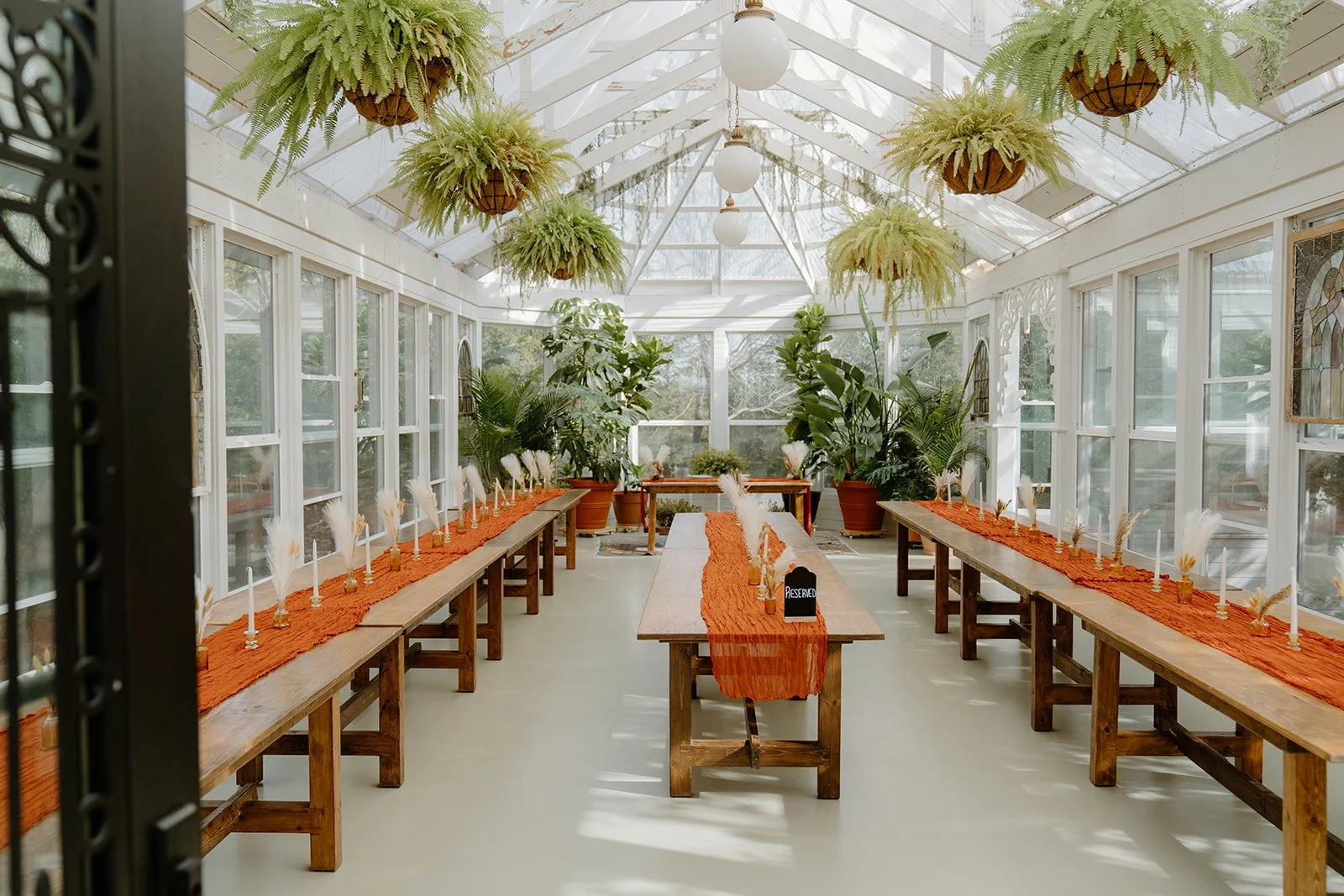
Full Capacity
Typical seating: 60–75 guests
Head table: Six-foot table placed at the octagon end of the conservatory
Farm tables run along the conservatory windows and down the center of the space, maximizing seating while keeping the room open and navigable. You can choose to block the front black doors or leave space for them to open.
Intentional gaps are left between table groupings to allow easy access to the side hallway and maintain smooth circulation throughout dinner service.
When couples plan to dance inside the conservatory, the head table can be tucked into the hallway after dinner, opening the octagon end into a dedicated dance space without requiring a full room reset.
Outdoor Flow, Transitions & Guest Movement
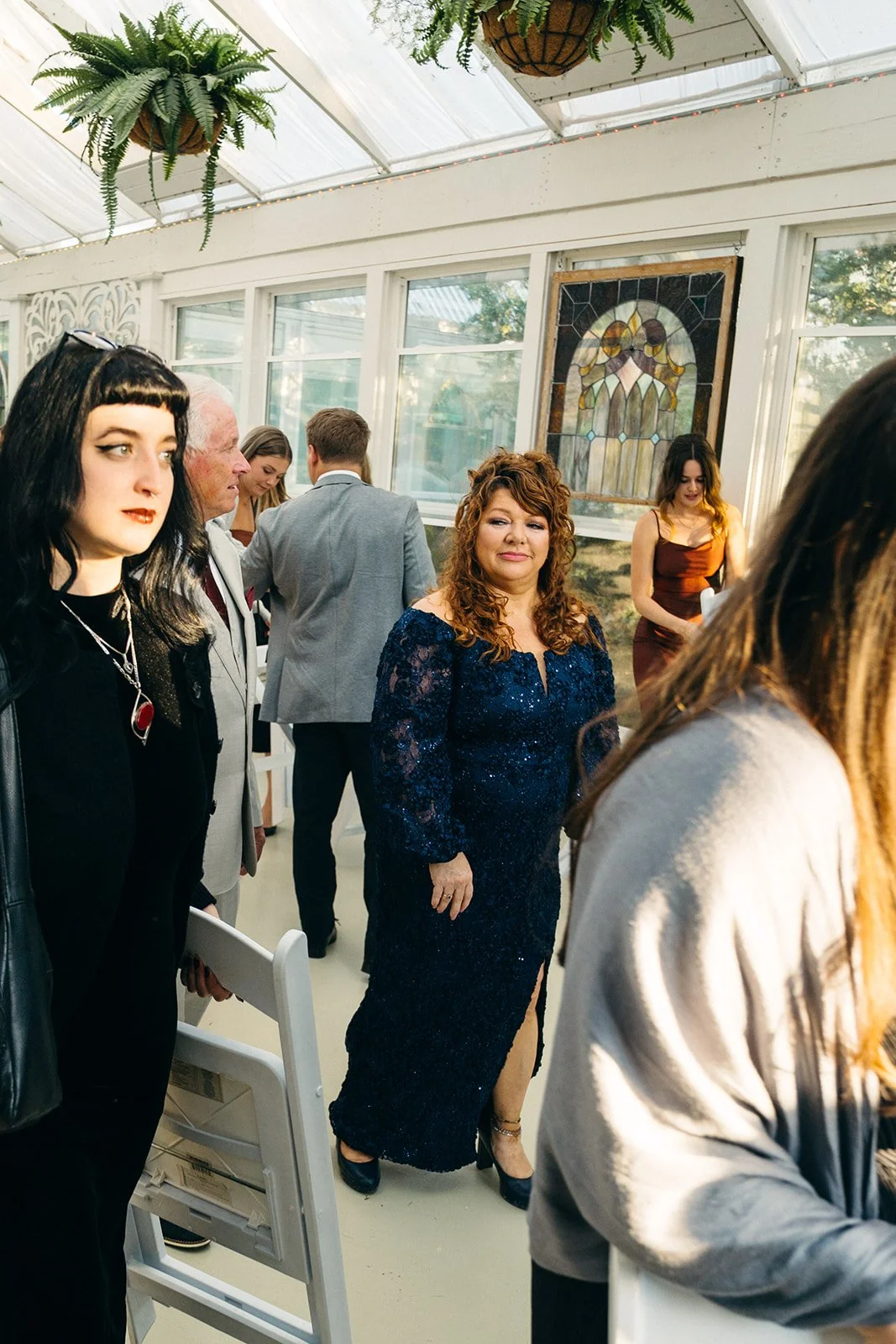
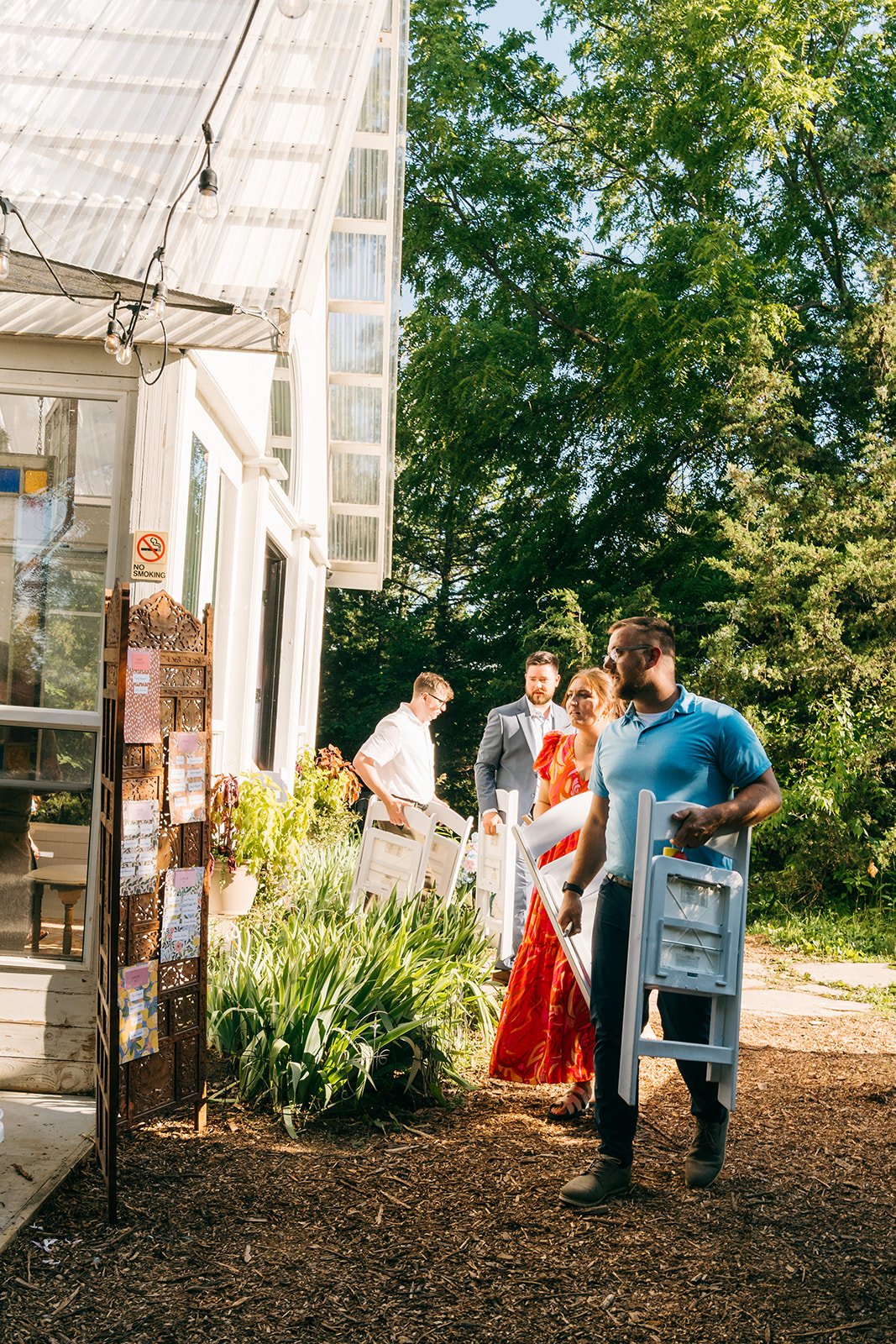
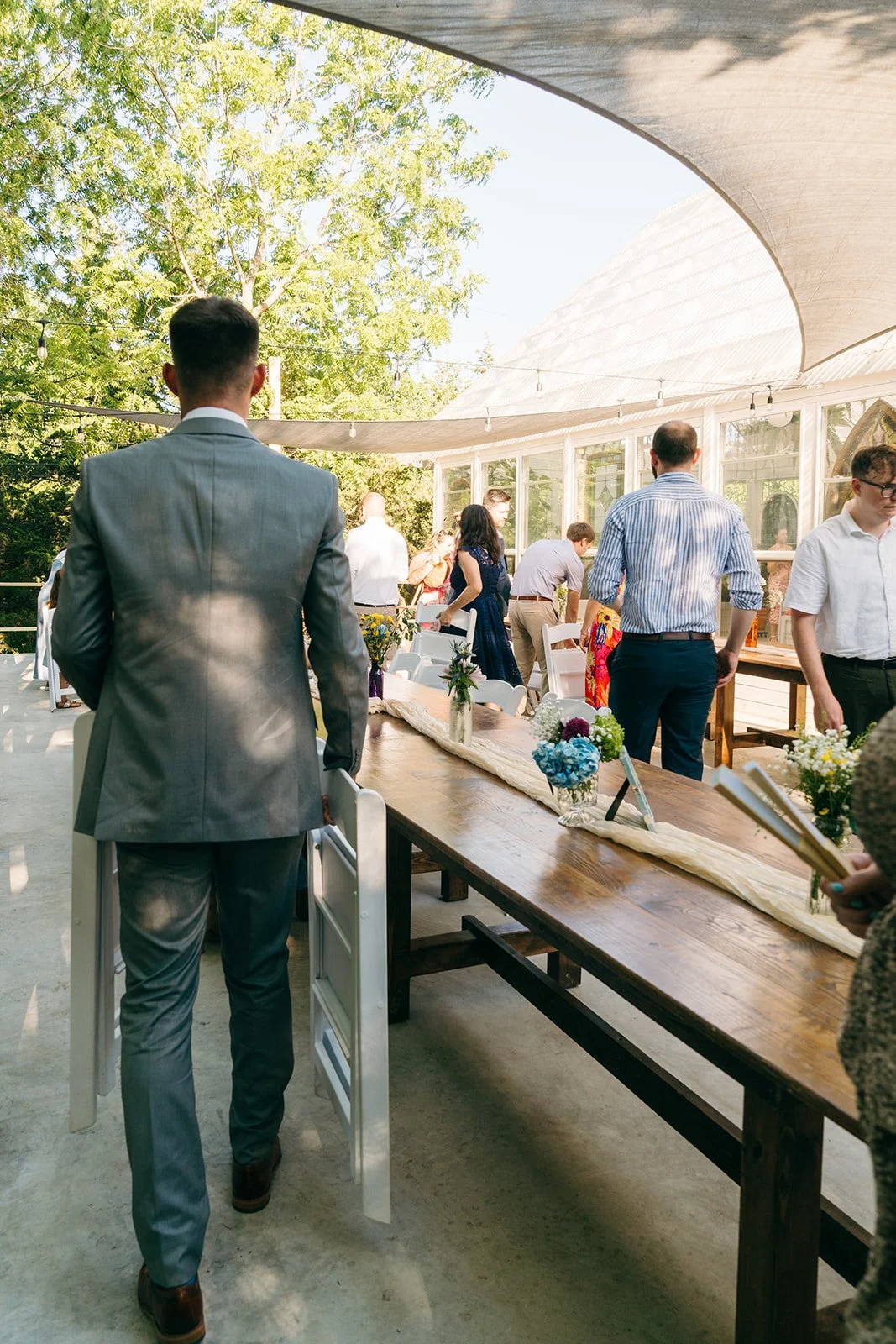
One of the simplest ways to keep the day flowing smoothly at Iris Aisle is by allowing guests to help transition the space. For ceremonies that move into an outdoor reception, many couples choose to have guests take their ceremony chair with them as they leave the ceremony area. This small moment keeps transitions quick, light, and intuitive, without a formal reset. It also sets the tone for the rest of the evening: relaxed, communal, and unhurried.
Outdoor Reception Spaces
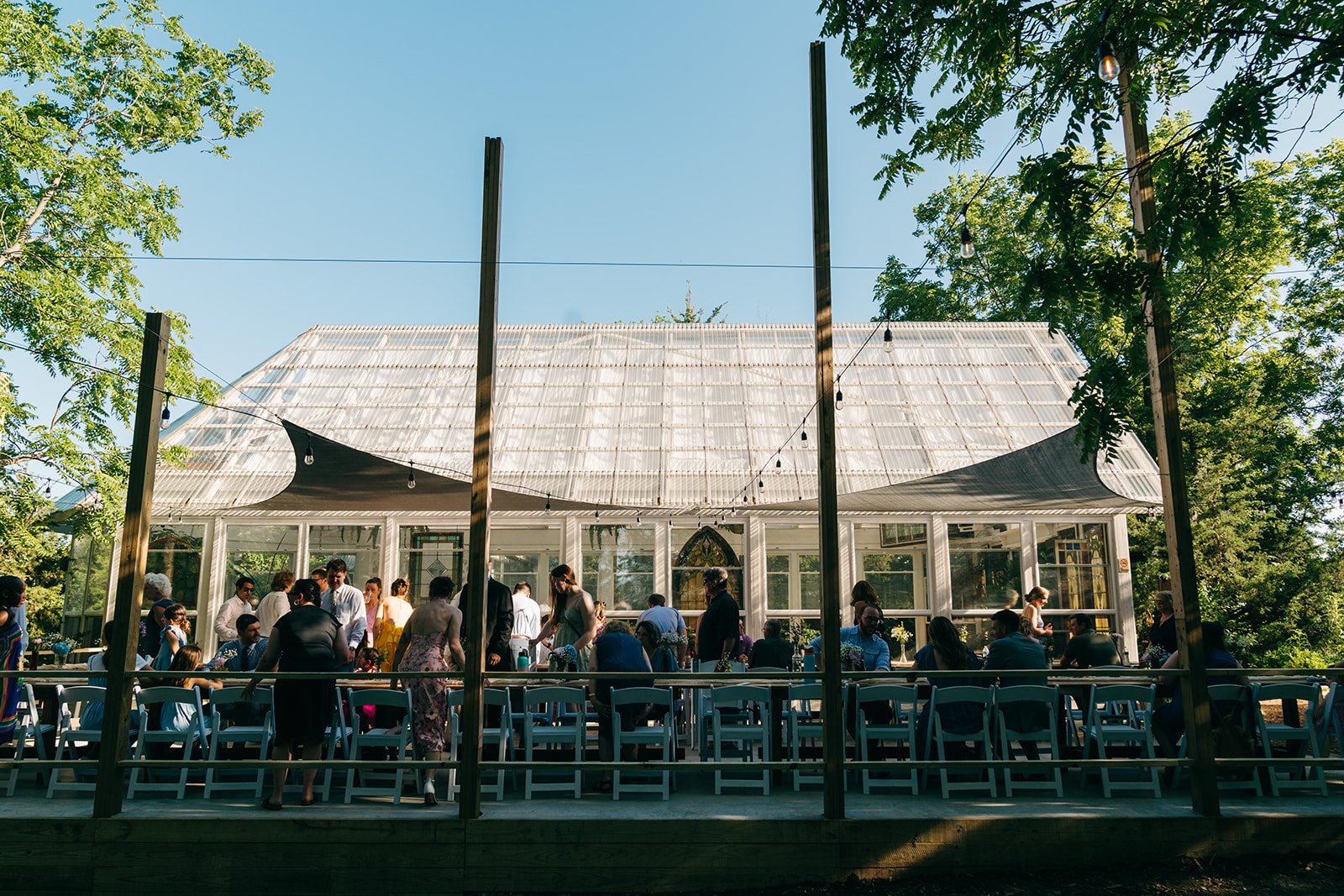
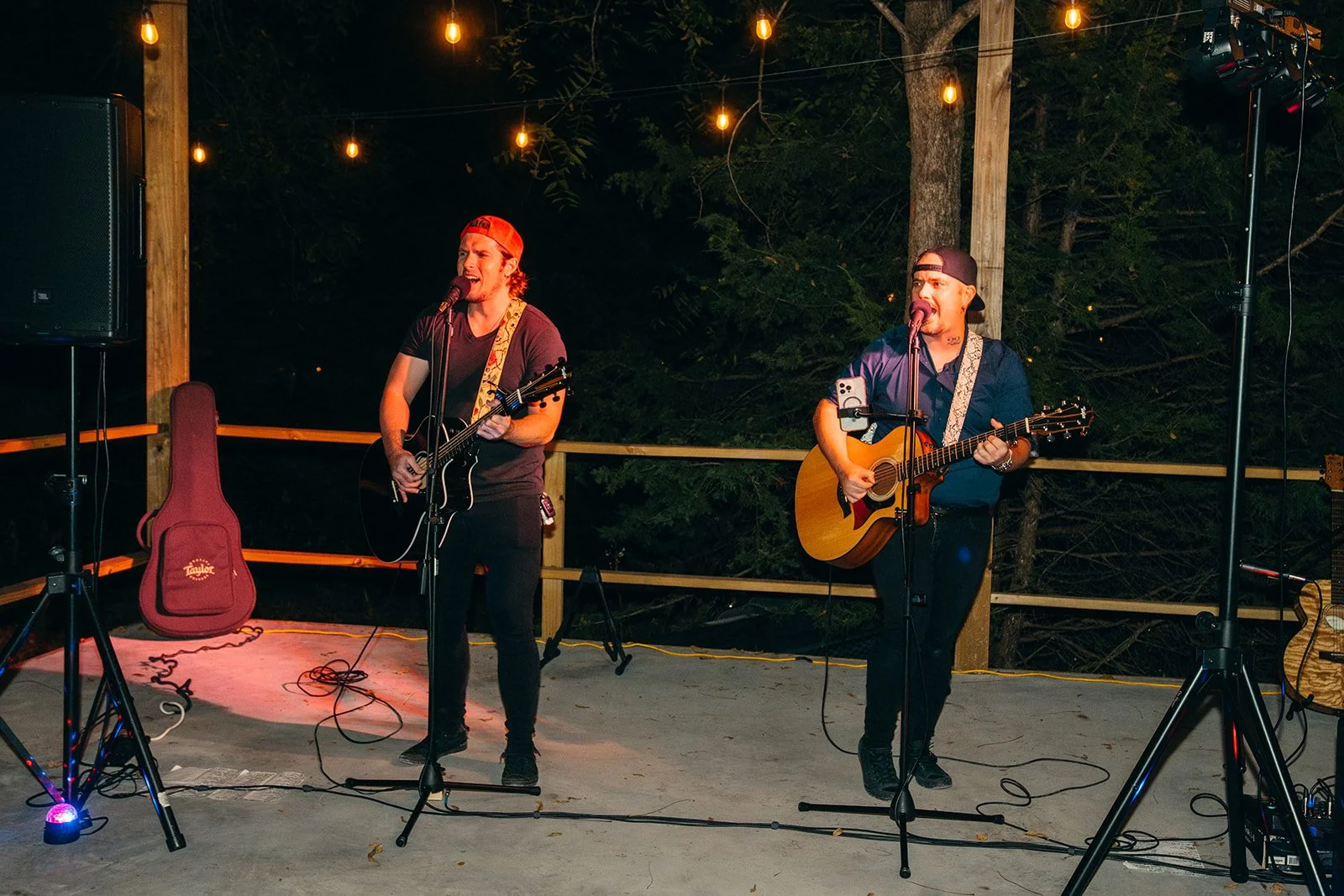
Concrete Reception Area (North Side) 20 × 44 ft | An open concrete space adjacent to the conservatory. With windows open, guests can still see and hear the music while mingling, cooling off, or stepping out without leaving the celebration.
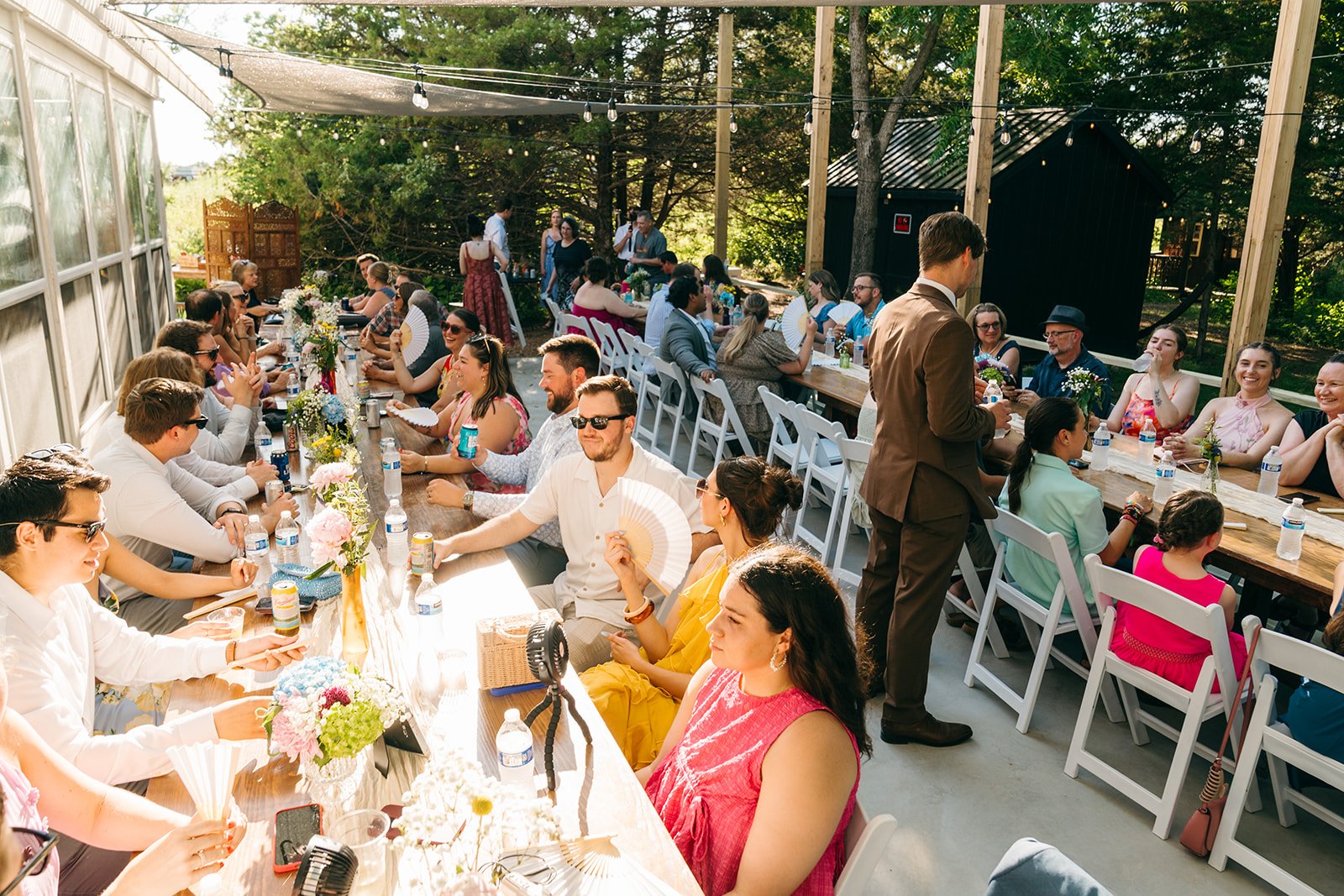
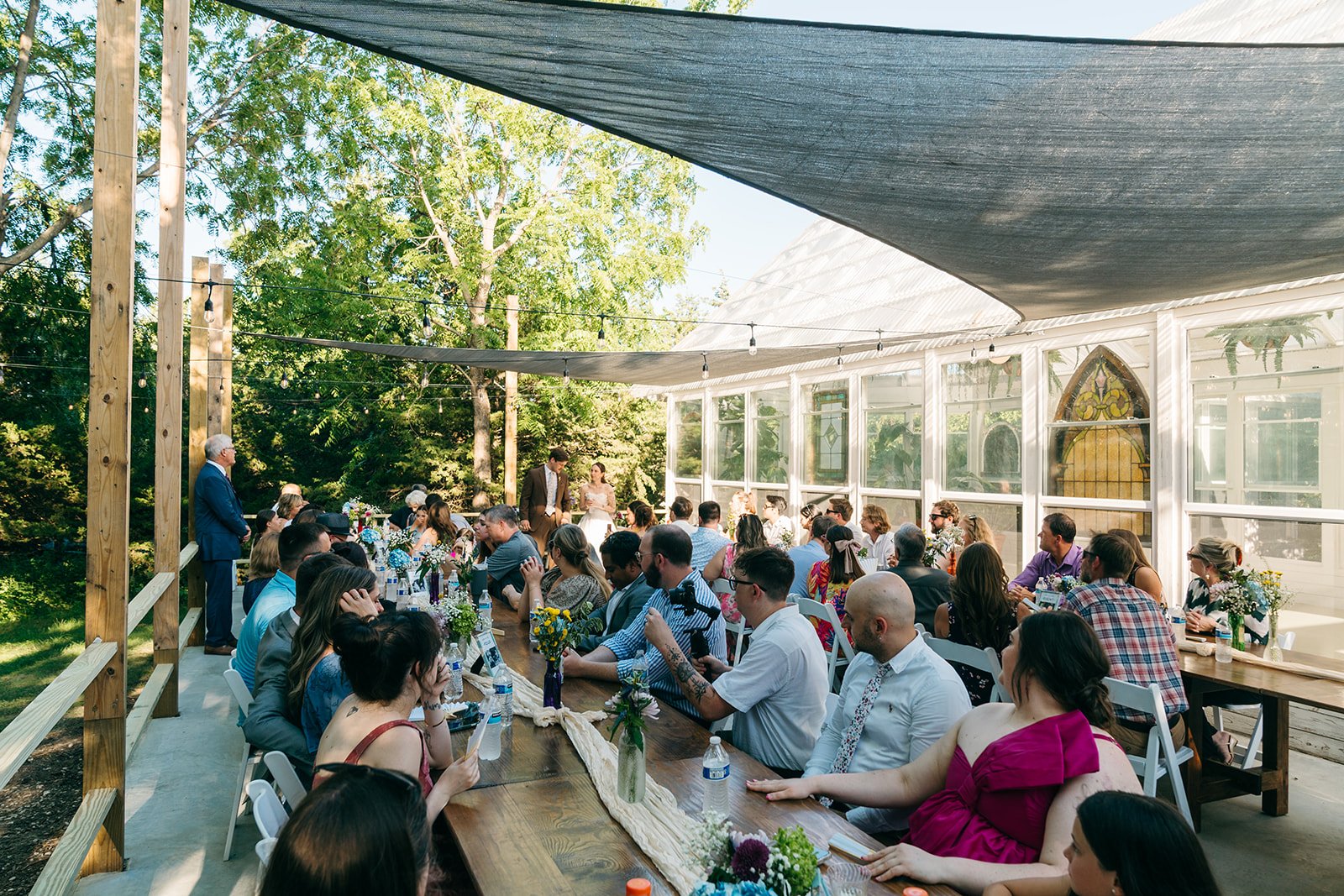
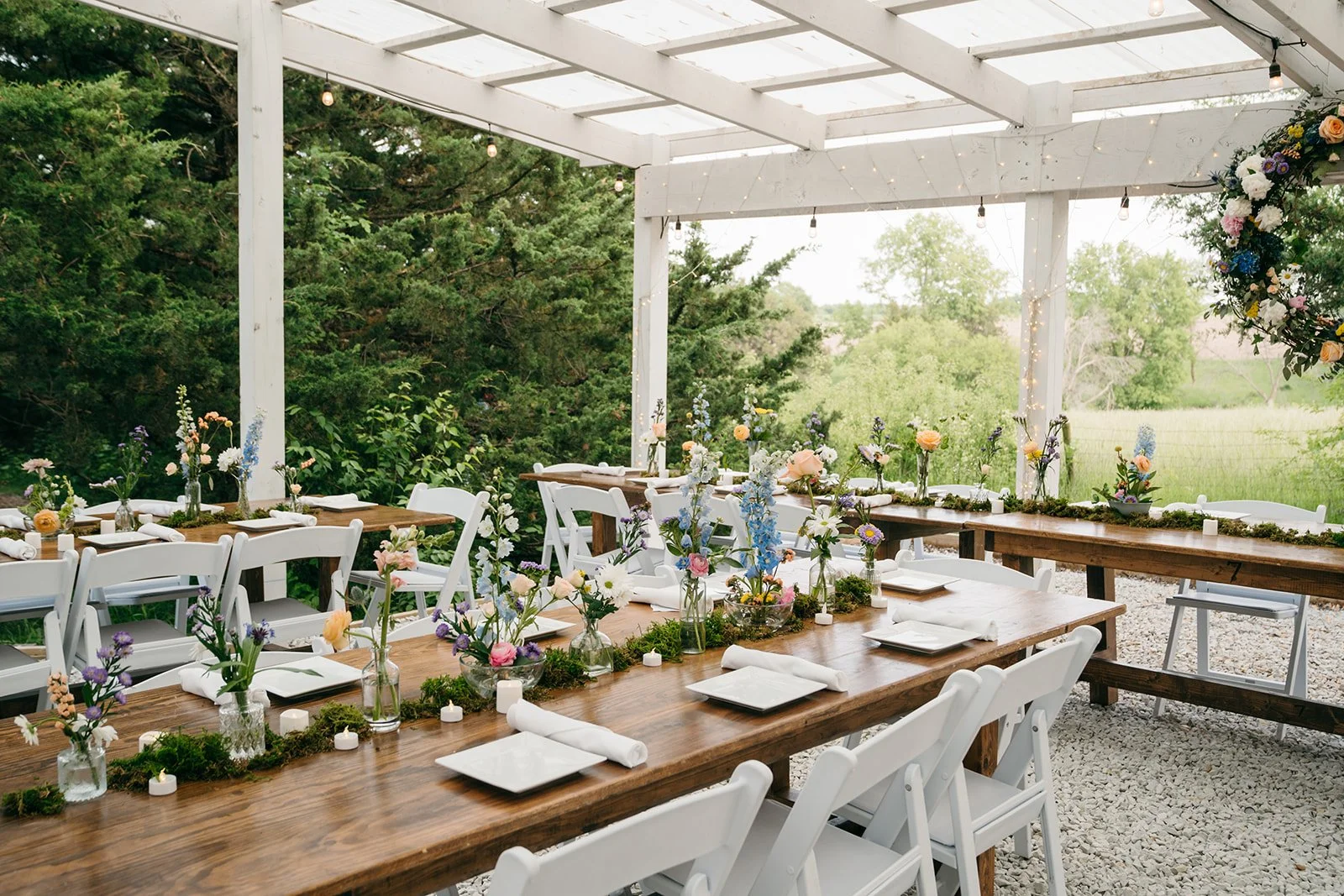
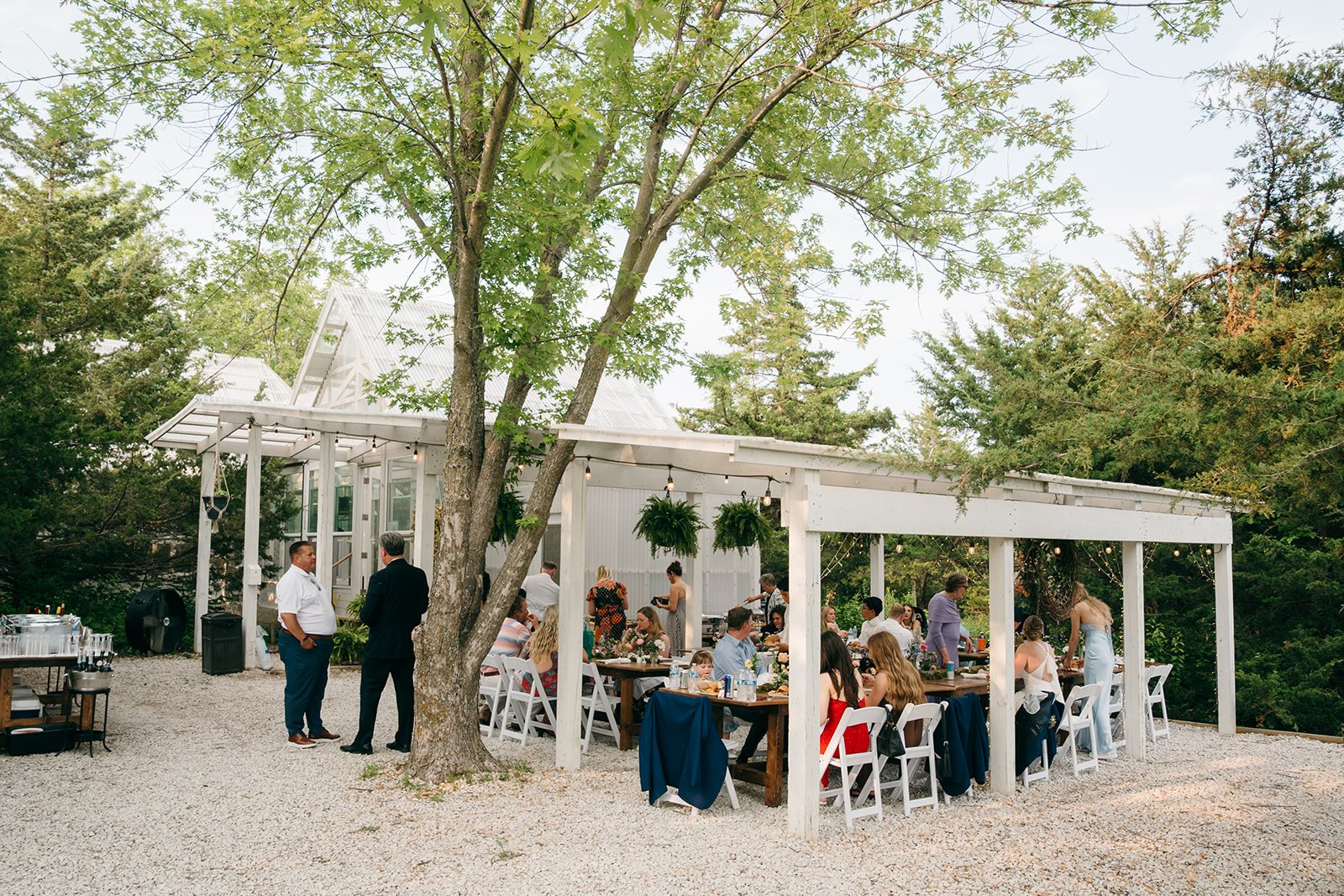
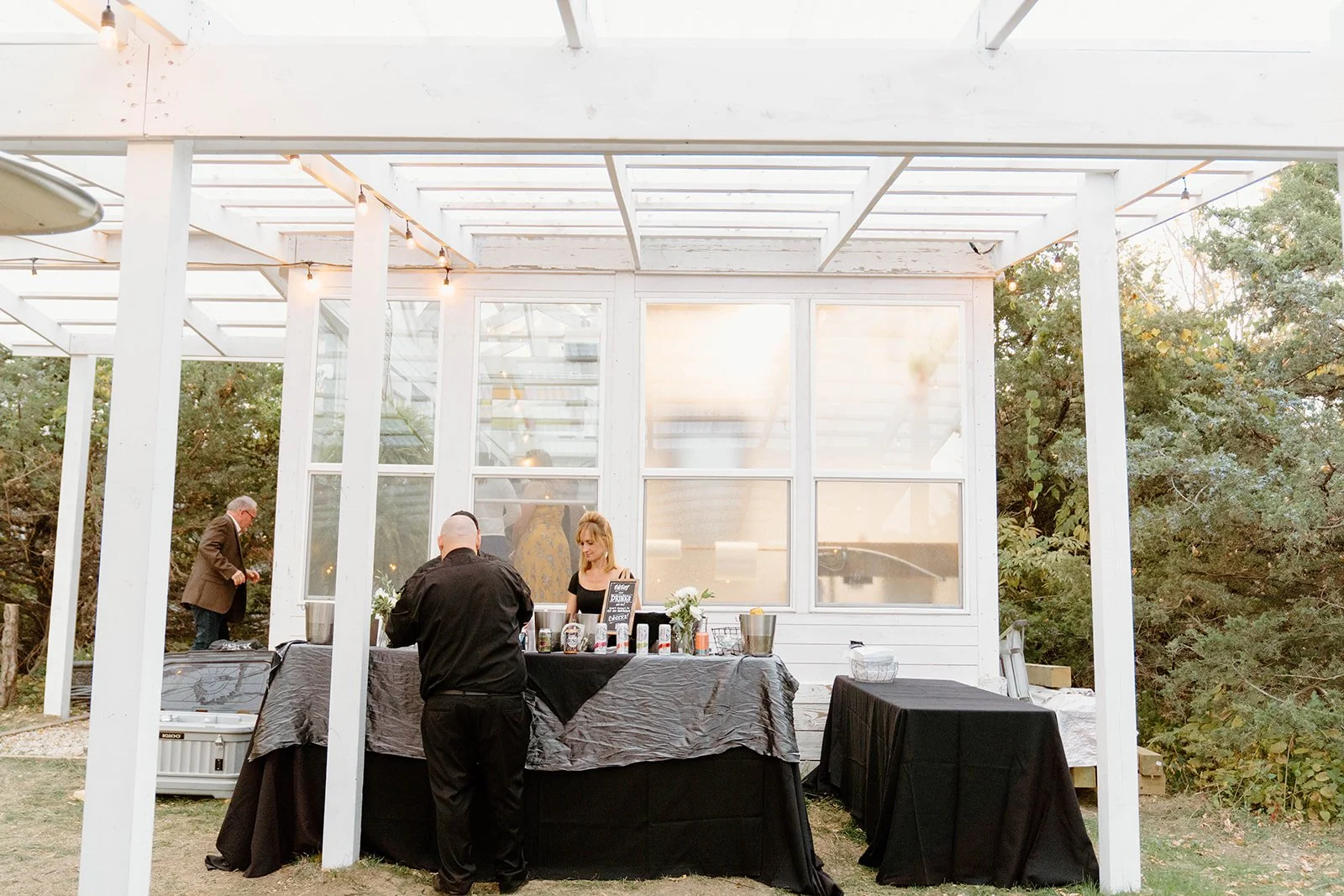
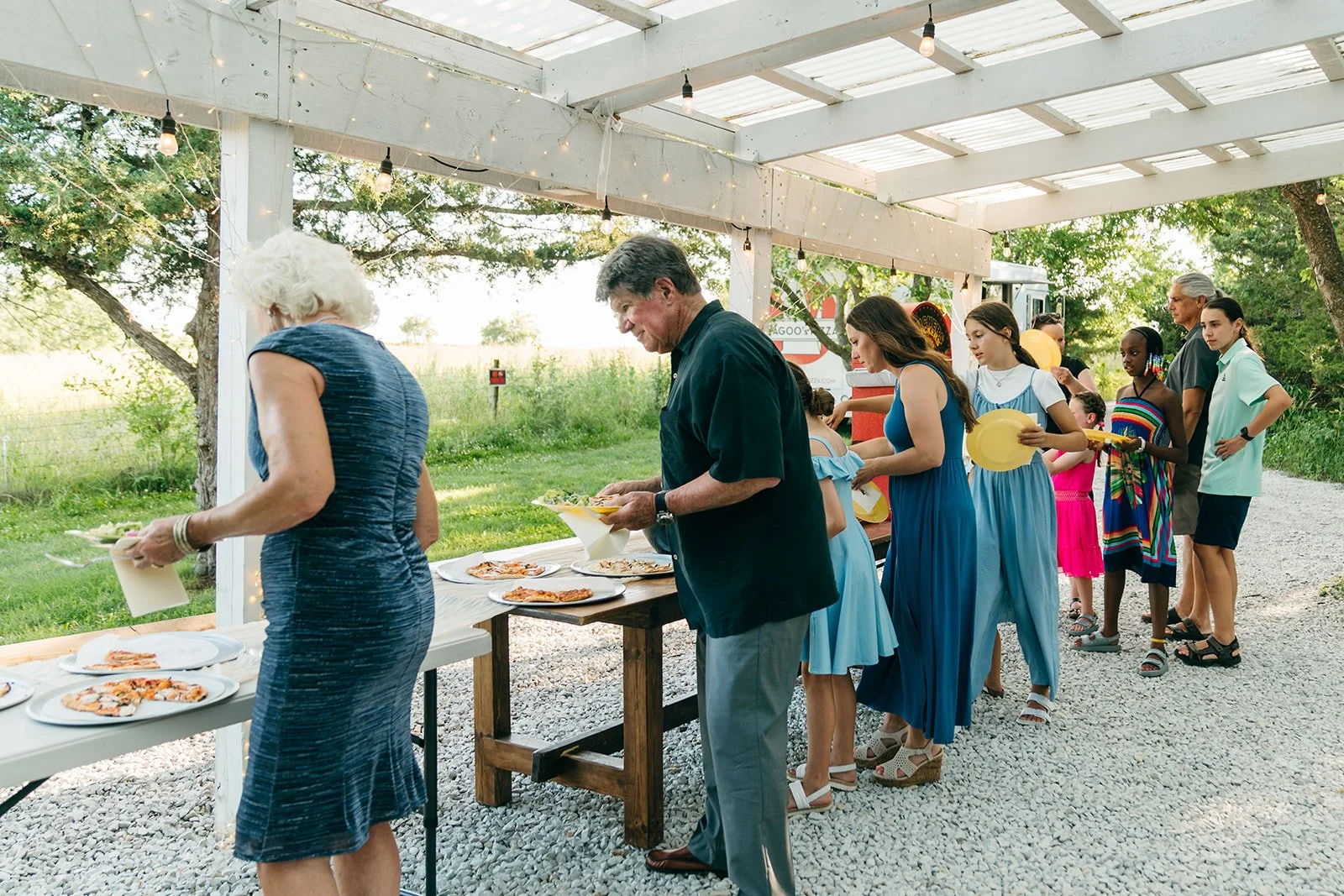
Covered Lean-To Reception Area 24 × 32 ft | A covered space on the south side of the conservatory, often used for cocktail hour, food service, and relaxed mingling close to hallway and bathroom access.
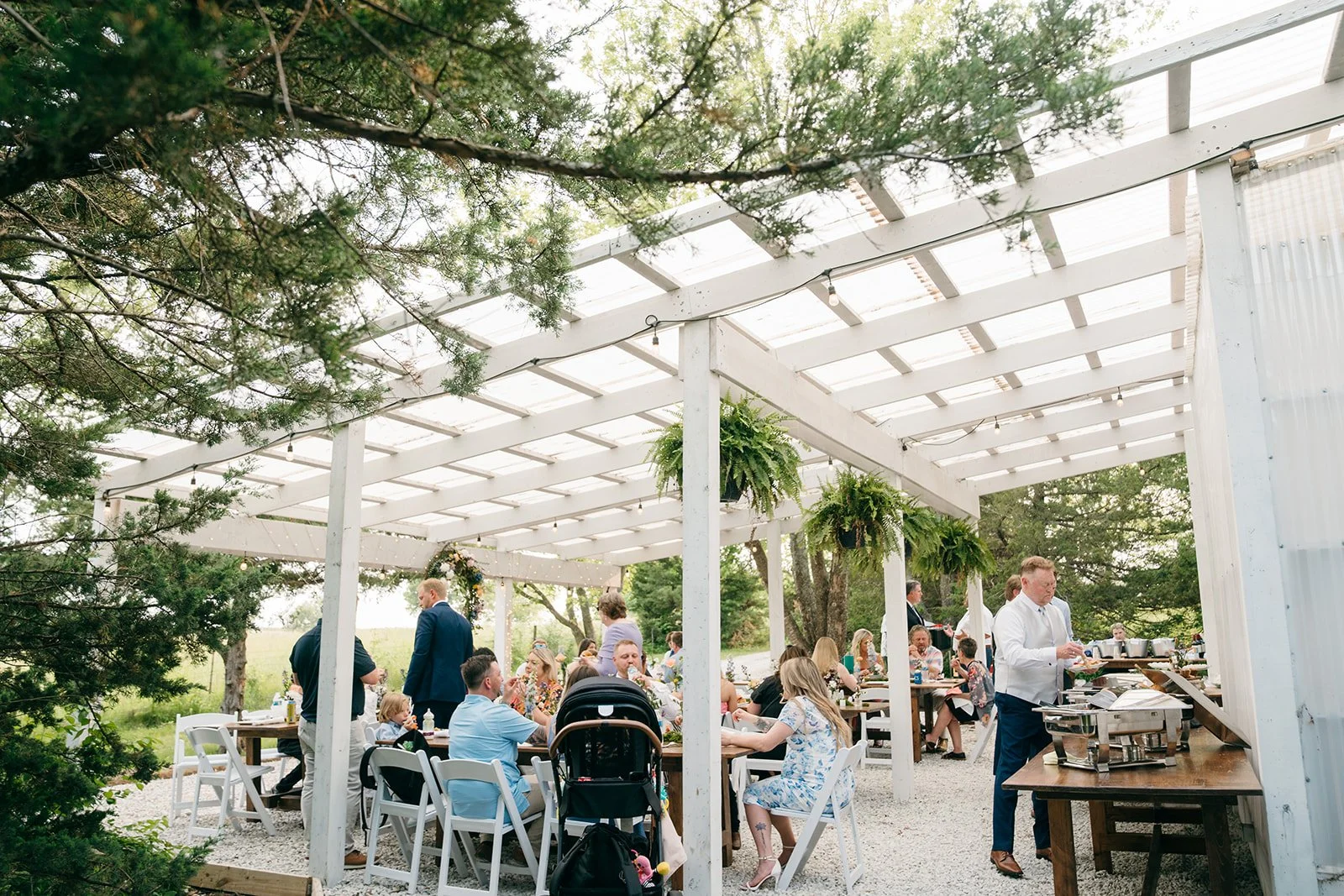
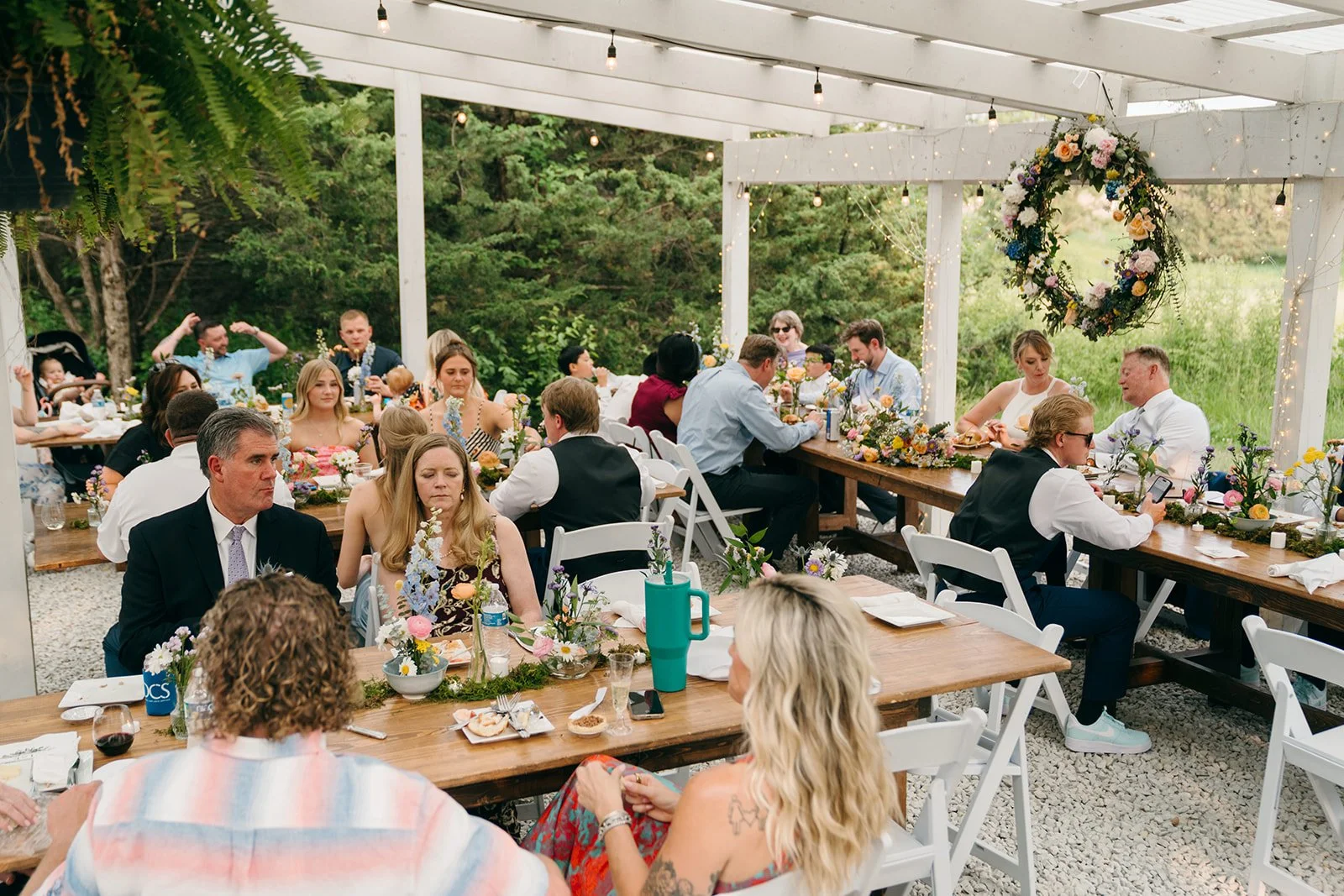
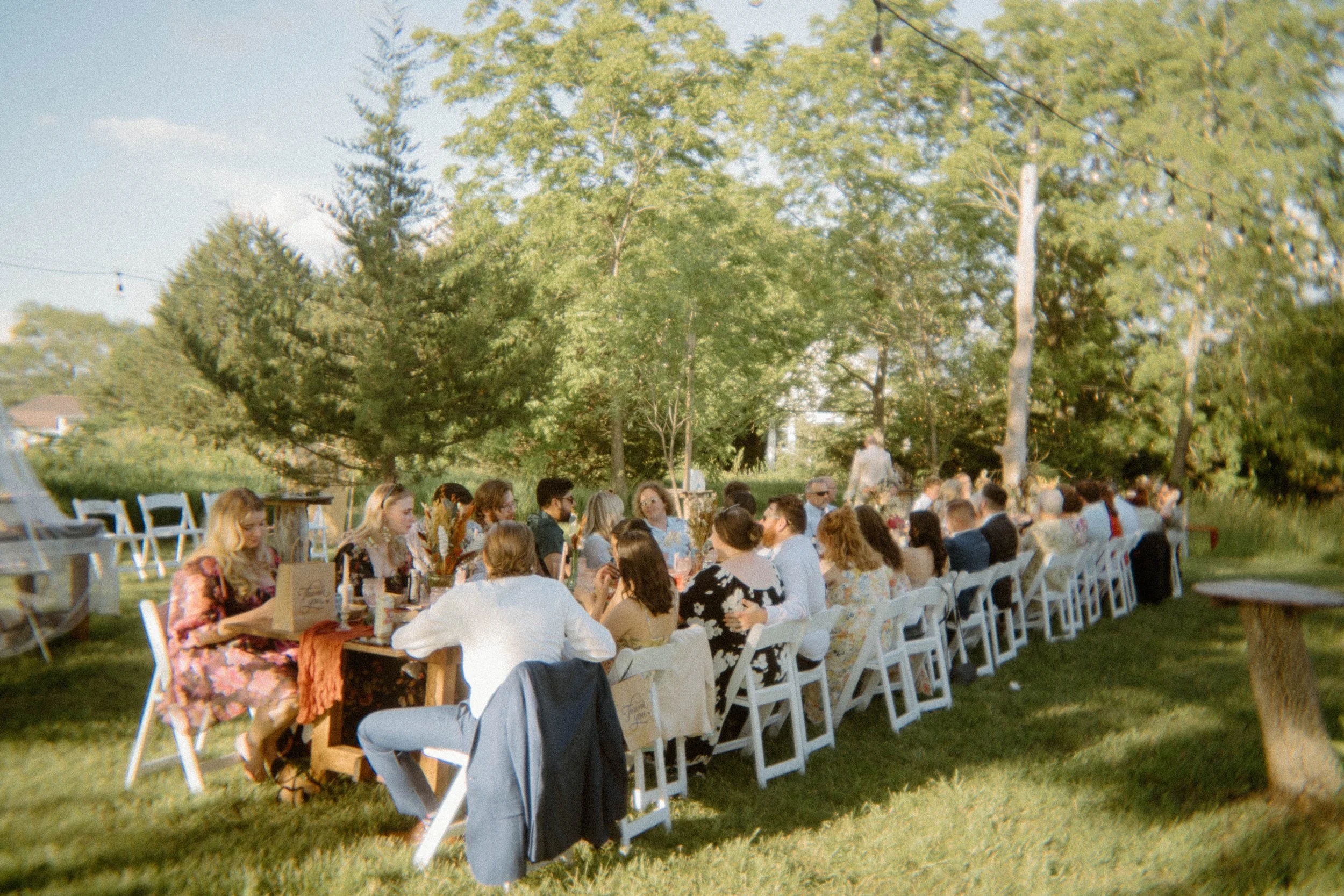
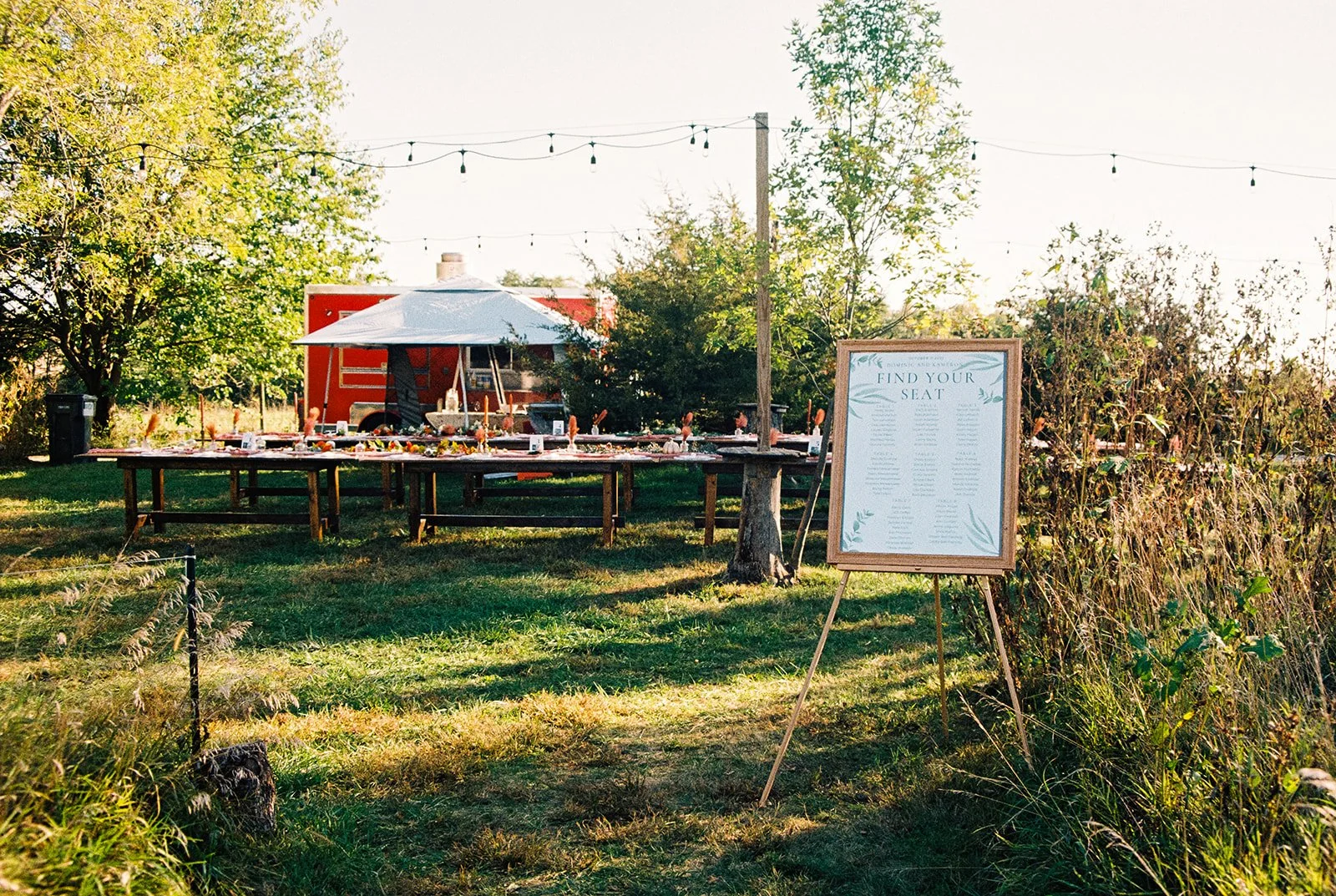
Grass & Tree Table Reception Area Approx. 20 × 60 ft | An outdoor area surrounded by trees and mini tables crafted from the land itself. This space naturally draws guests for conversation, lounging, and late-evening moments near the fire pit. Easy access for food trucks.
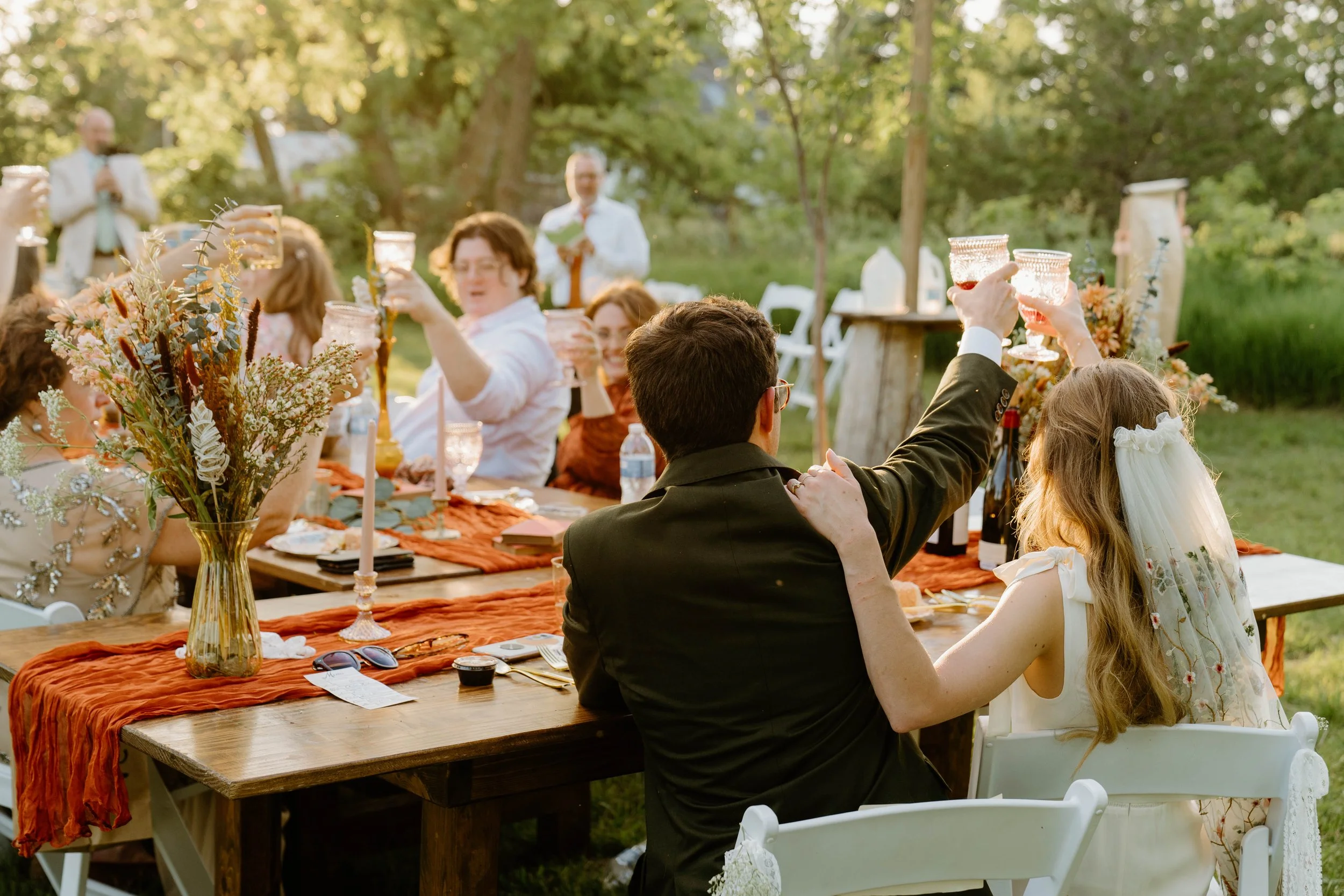
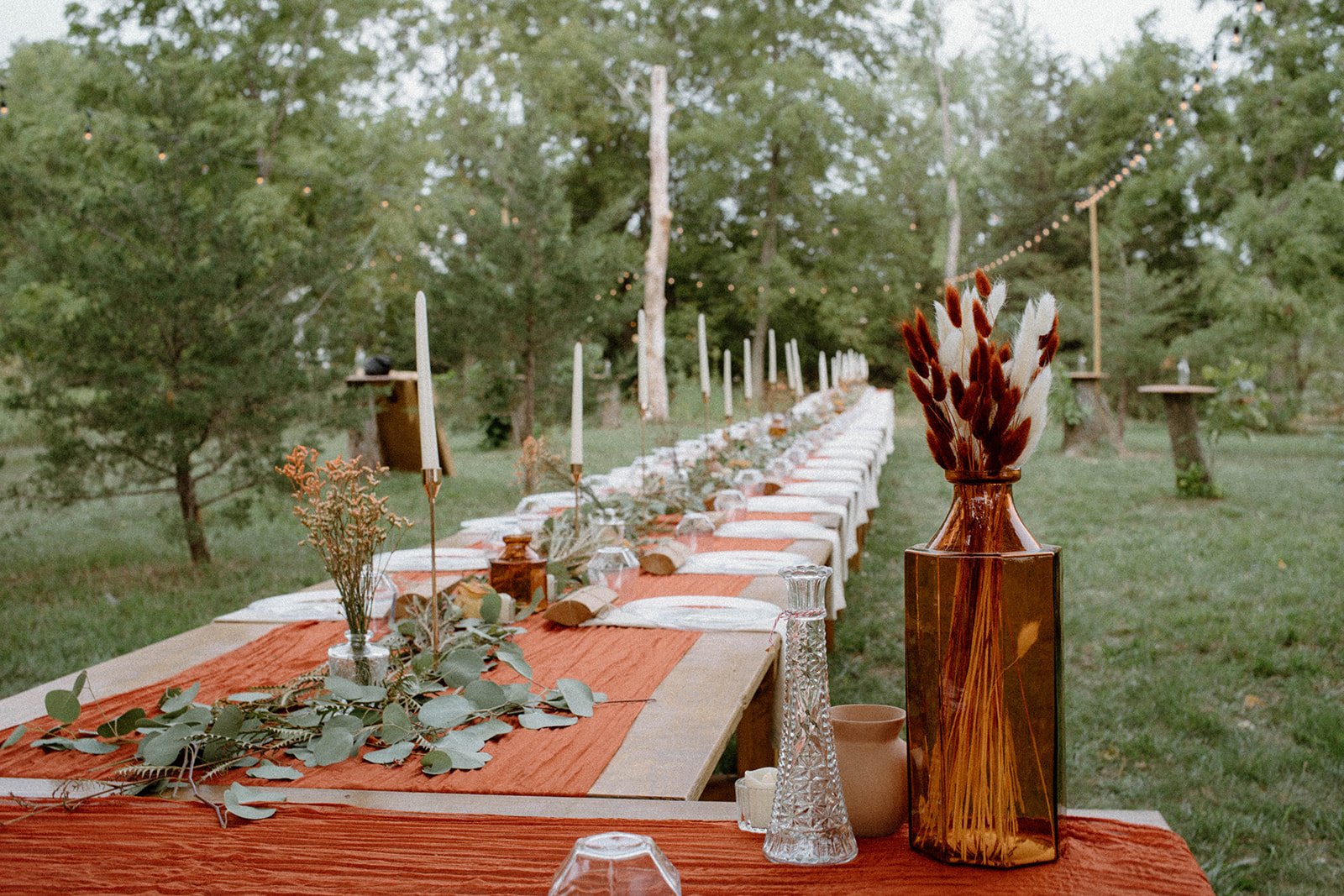
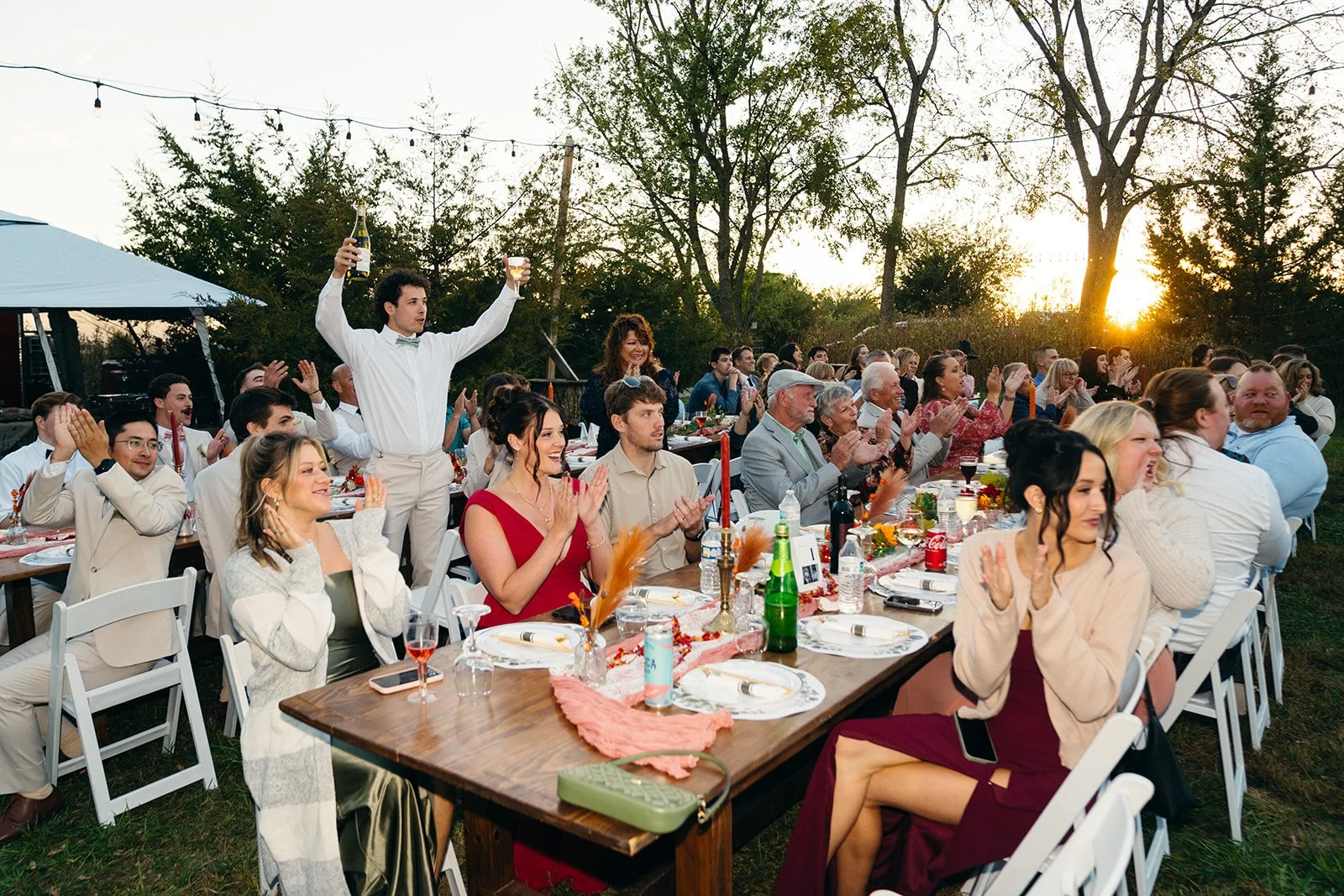
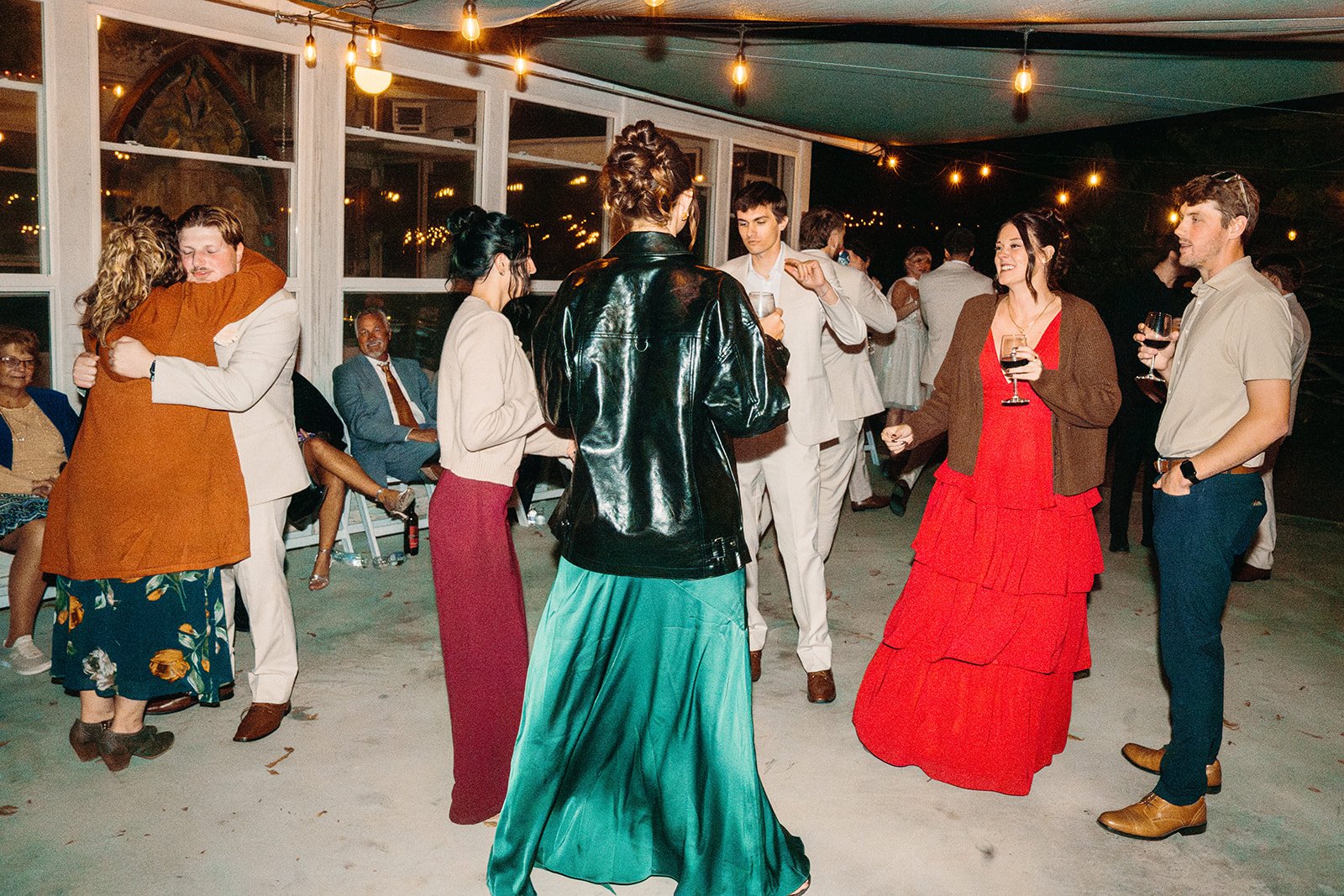
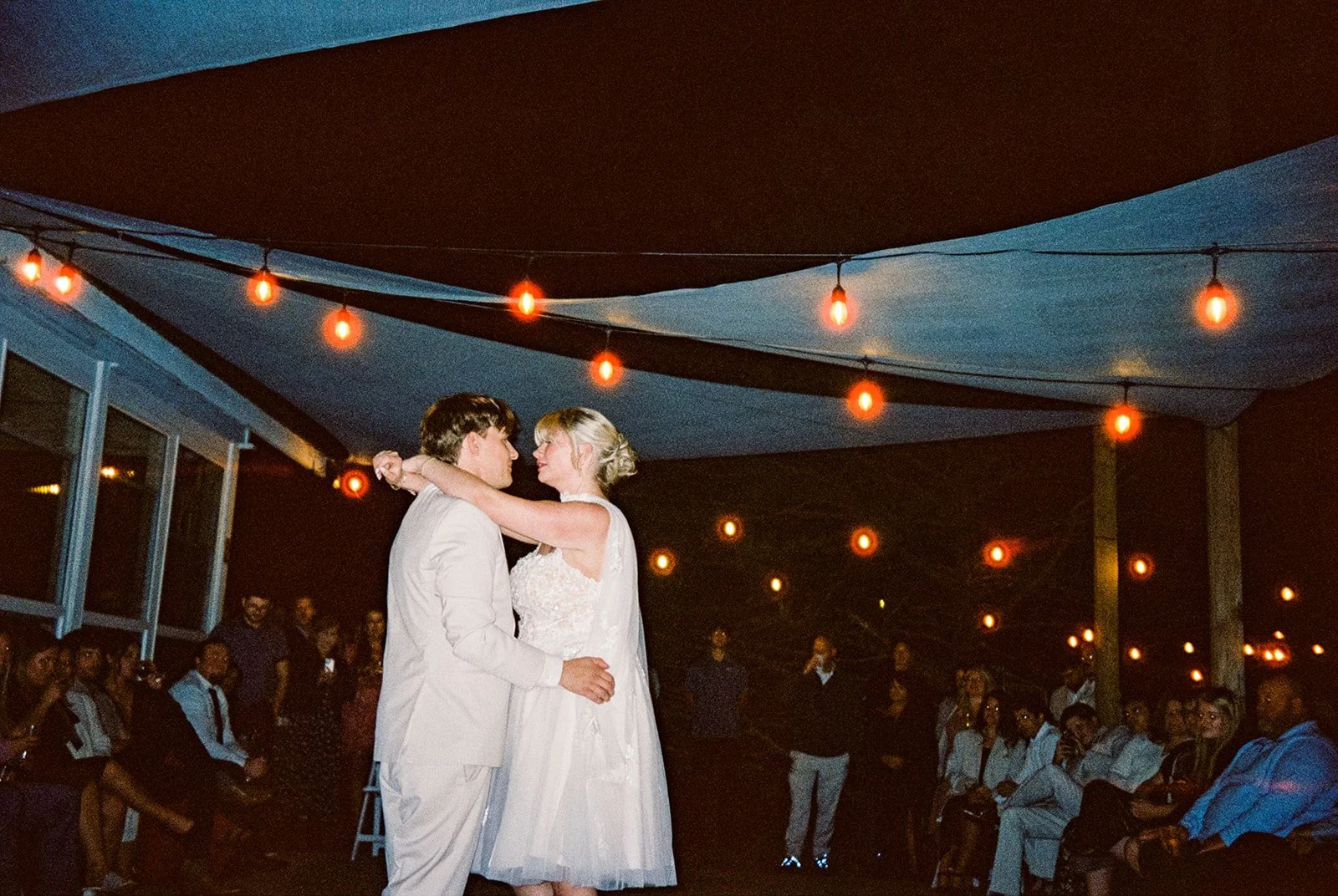
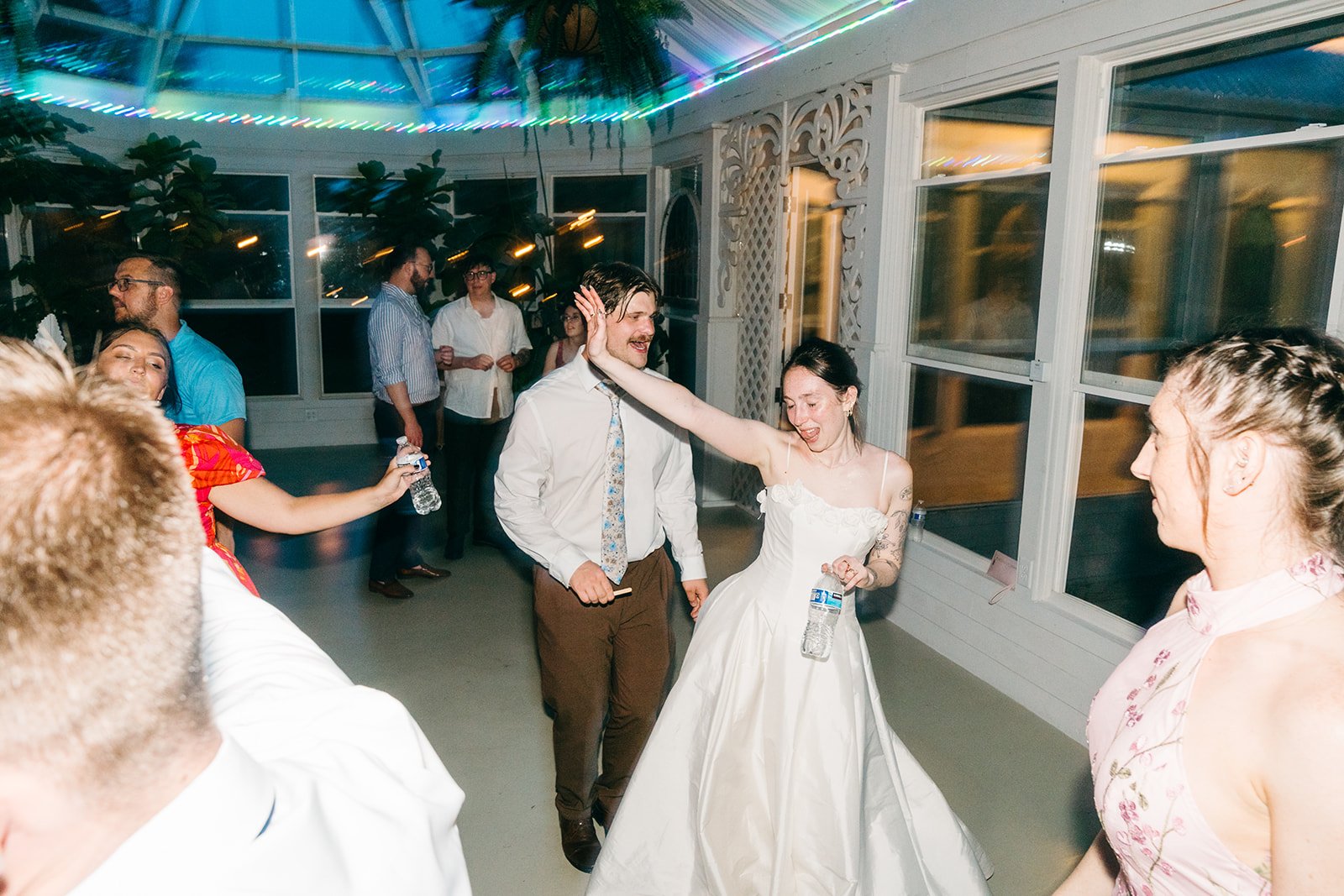
Conservatory Dancing Approx. 20 × 50 ft | Primary Dance Floor Most couples choose to dance inside the conservatory, where the music, lights, and shared energy feel immersive and celebratory.
Food, Buffet & Catering Placement
Food service at Iris Aisle is designed to support easy guest flow and avoid crowding any one space. Most couples choose a setup that allows guests to move naturally from one area to the next rather than forming long lines in the middle of the reception.
Below are the most common and well-functioning food placement options based on how the property is used.
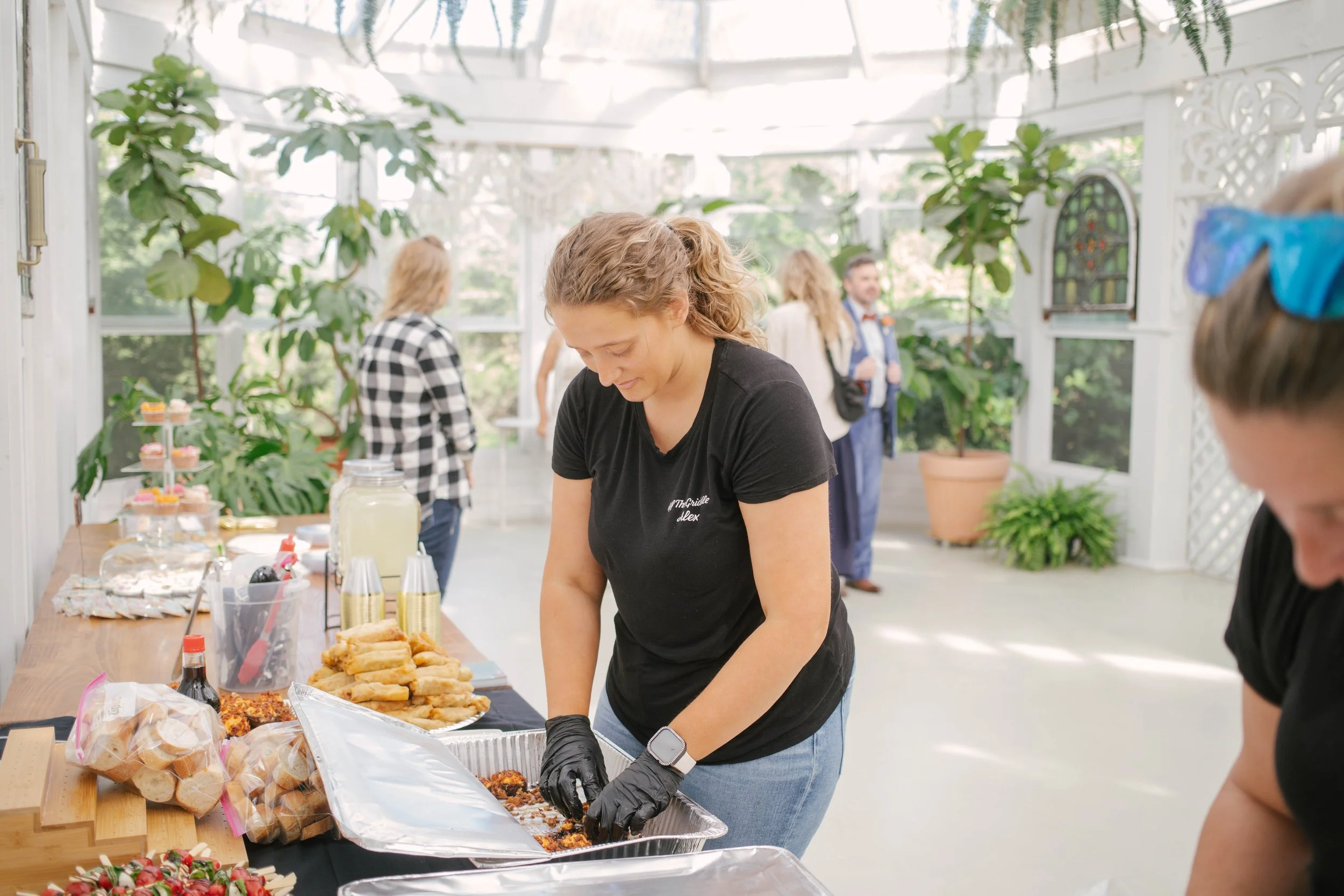
Buffet-Style Catering
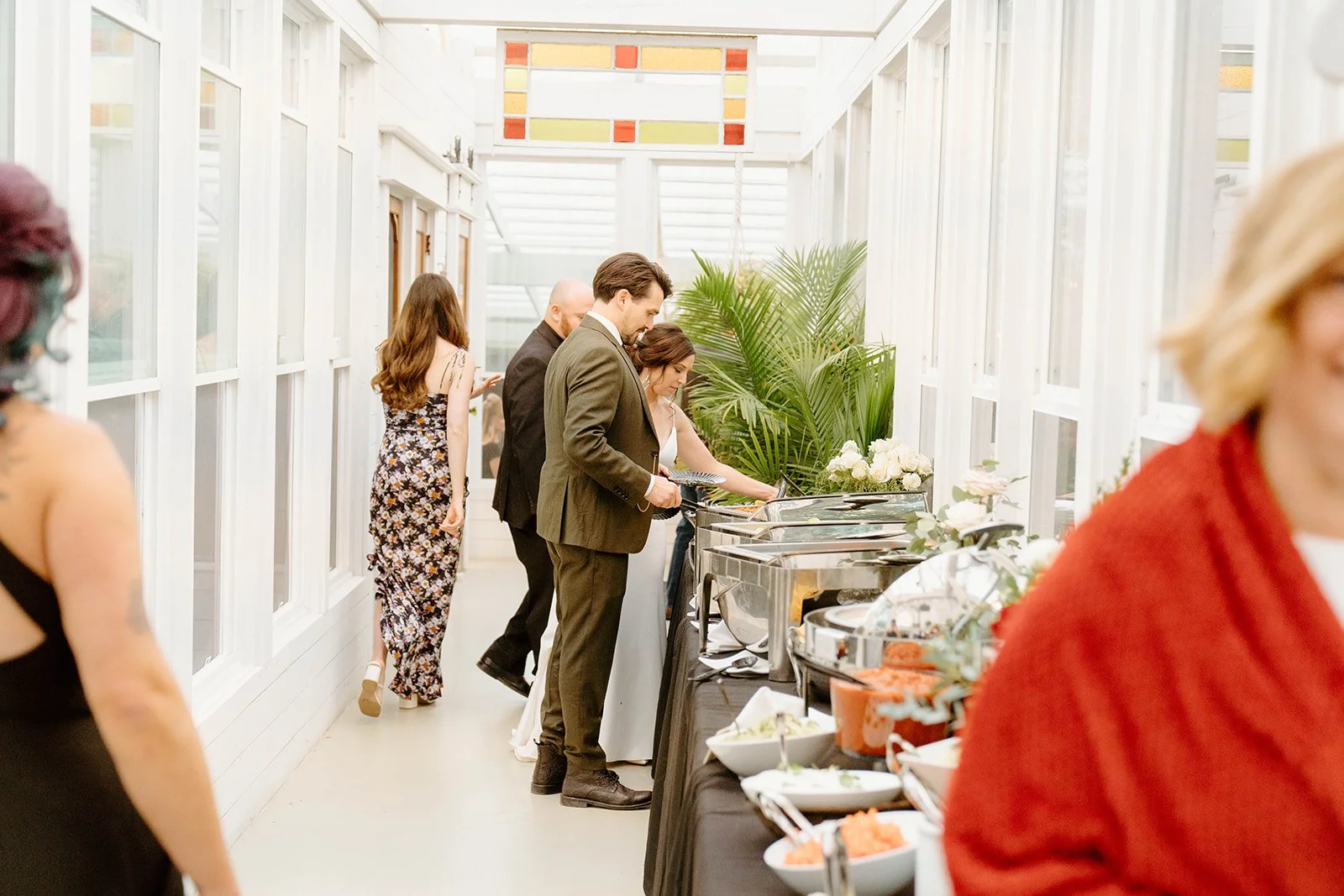
For buffet-style meals, food tables are most often set up in the hallway of the conservatory.
This creates a natural flow where guests:
Enter the buffet line from one side of the conservatory
Move through the hallway for food
Exit out the opposite side and return to seating
This setup keeps food service moving smoothly while preventing congestion near tables, dancing, or high-energy areas.
When the conservatory is not being used for dinner, buffet tables are commonly placed in the main gathering area instead, allowing guests to circulate easily without crossing through active reception spaces.
Covered Lean-To Buffet & Cocktail Use
The covered lean-to space on the south side of the conservatory is another popular option for buffet-style food and catering service.
This space works especially well because it:
Provides coverage while remaining open and accessible
Sits close to hallway and bathroom access
Keeps food service just outside the main reception energy
The lean-to is often used for:
Buffet-style dinners
Cocktail hour setups
Drink stations that transition smoothly into dinner service
It’s common for this space to serve dual purposes throughout the evening.
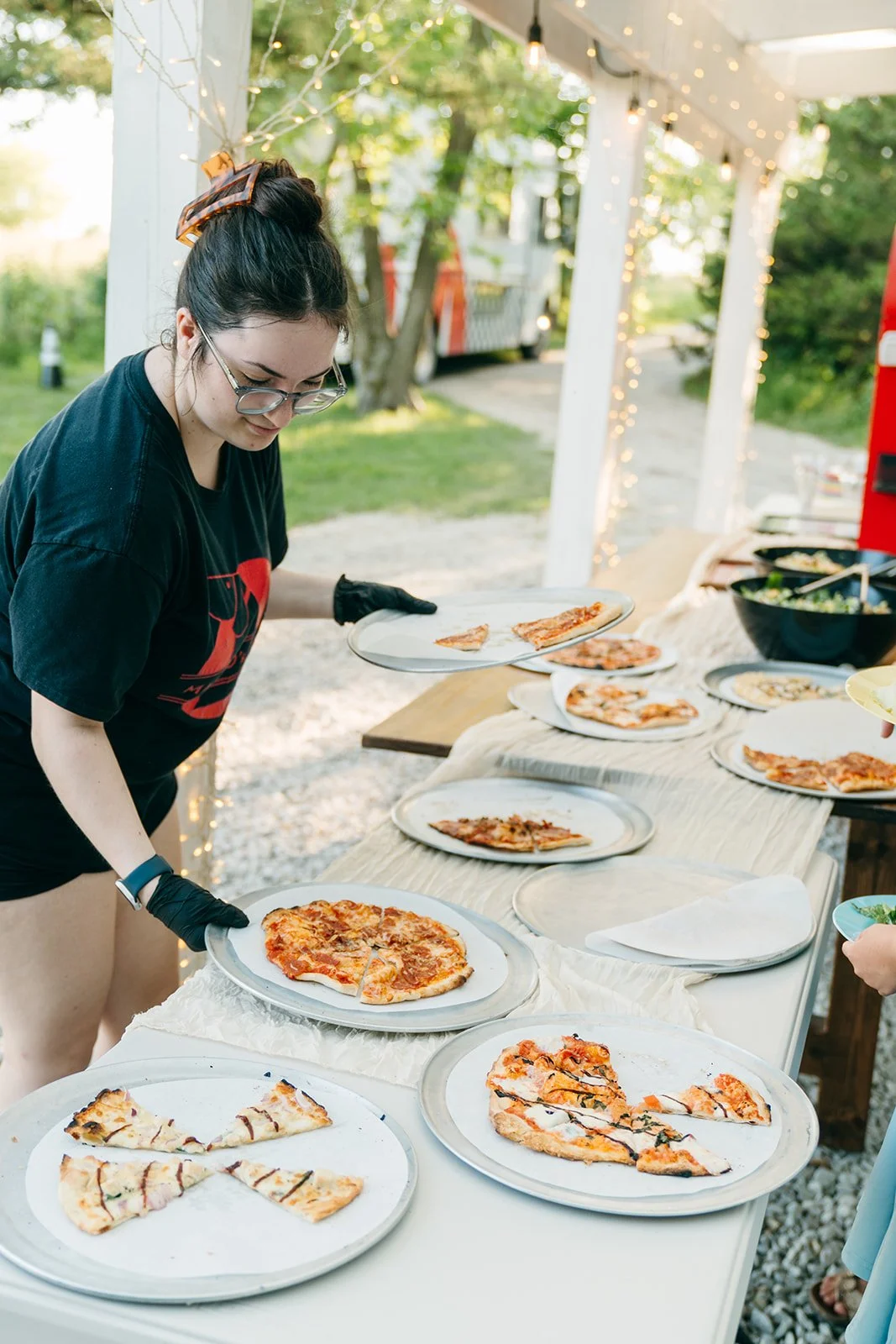
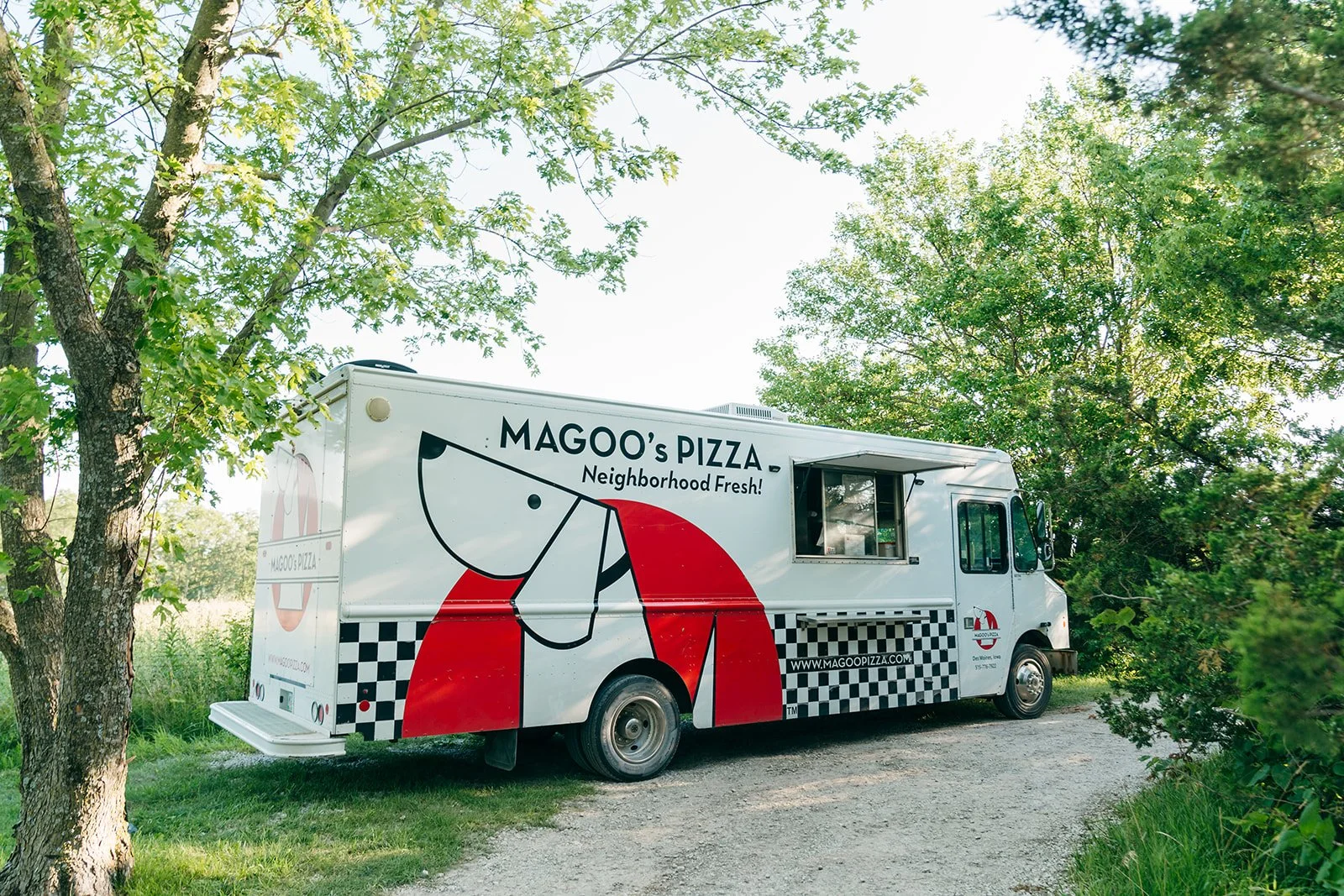
Food Truck Placement (Most Common)
Food trucks access the property via the gravel drive, and placement depends on truck size and service needs.
Food trucks may:
Pull all the way back near the lean-to area for closer service
Or stop along the gravel drive near the grass and outdoor reception space.
Both options allow food trucks to serve efficiently without interrupting the flow of the reception.
Food trucks pair especially well with:
Outdoor-focused receptions
Casual dinner service
Late-night food options
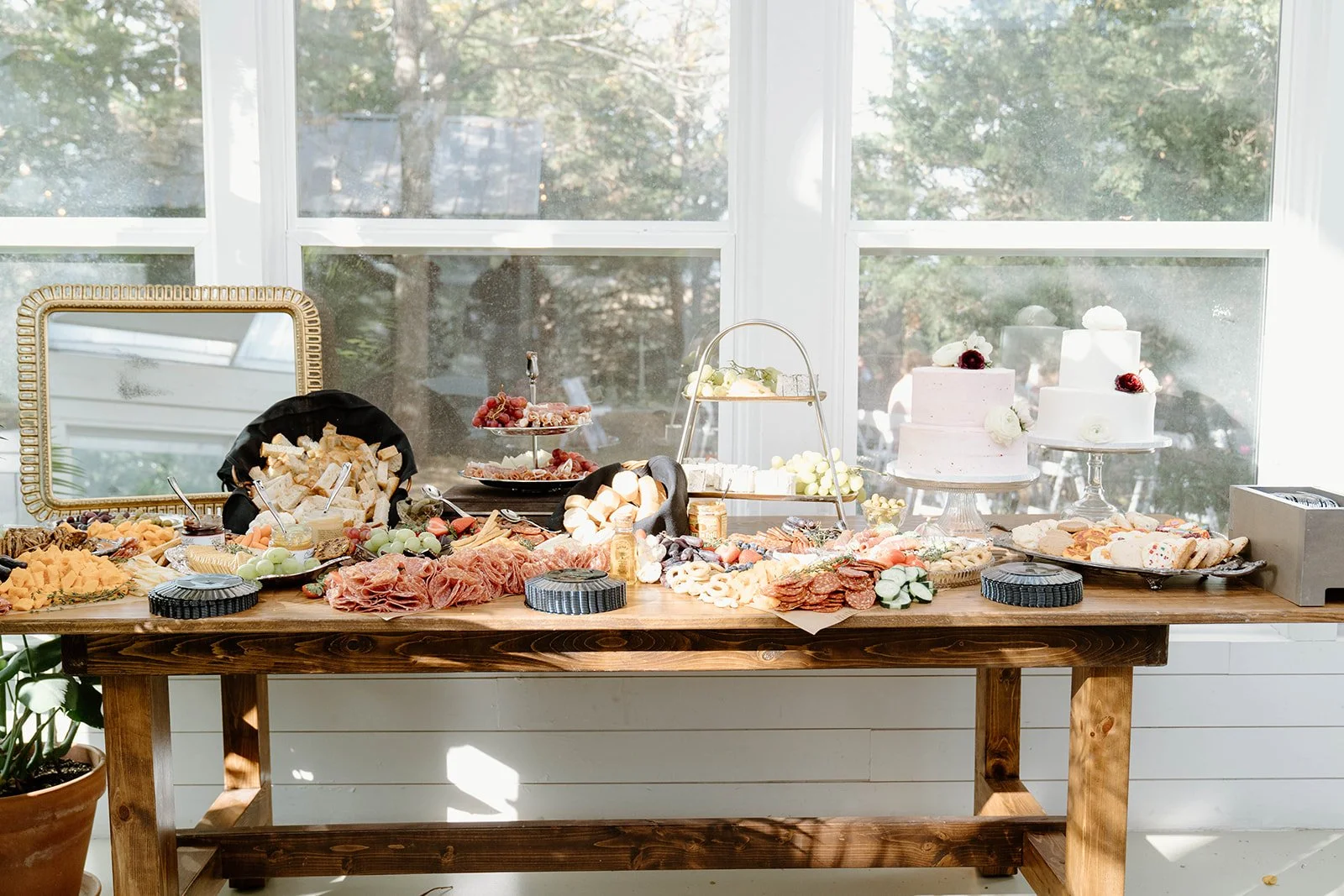
Dessert, Drinks & Late-Night Food
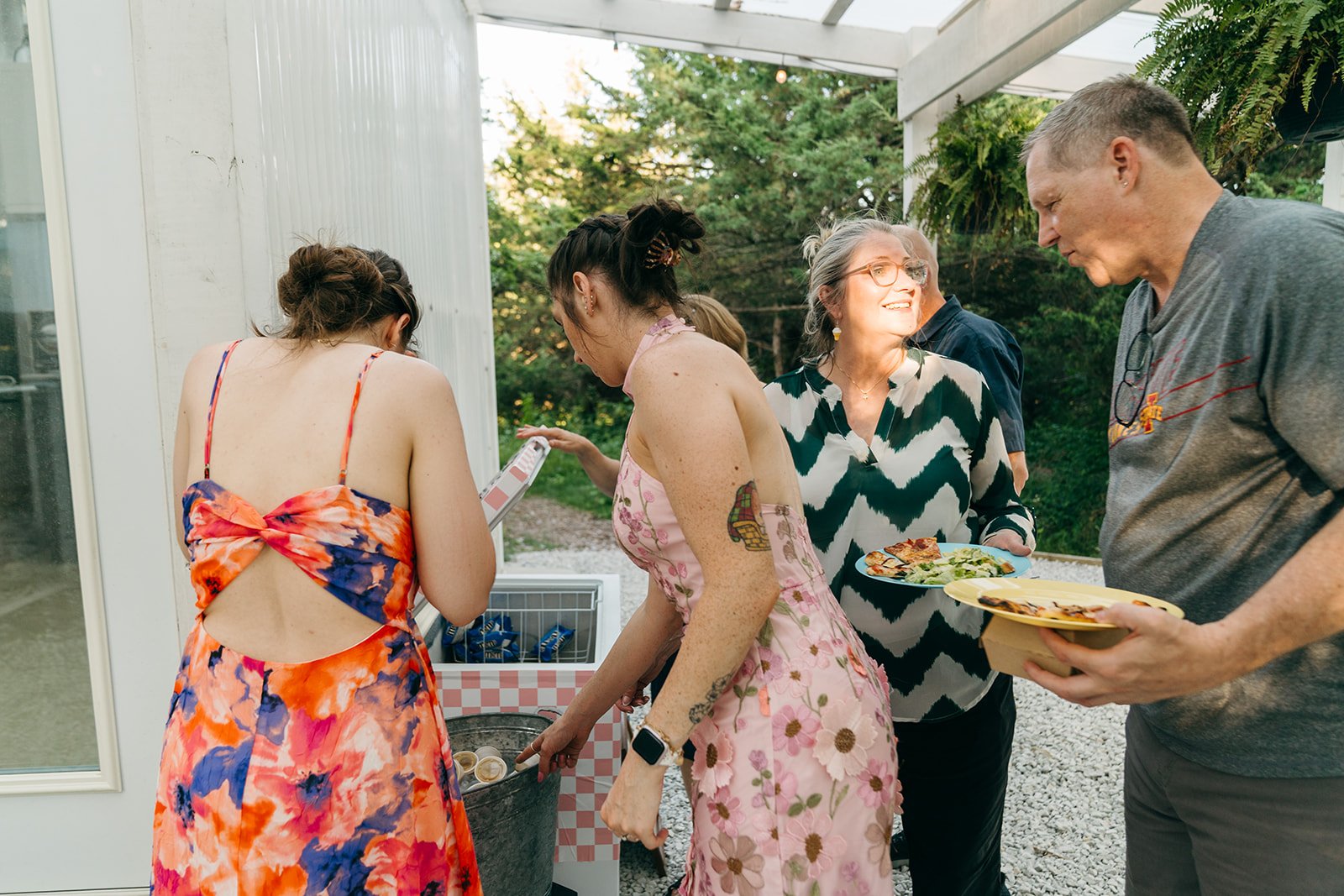
Smaller food setups, such as dessert tables, drink stations, or late-night snacks are often placed:
Along the edge of the conservatory
Where cock-tail hour takes place
Near the concrete reception area
Within outdoor gathering spaces
Spacing food throughout the property helps keep lines short and allows guests to grab refreshments without stepping away from the celebration.
*Food placement is flexible and often adjusted based on guest count, catering style, and overall reception flow. We’re happy to coordinate with caterers and planners to determine what will work best for your specific event.
If you ever feel unsure about how to use the spaces, we’re always happy to talk it through. This guide is here to support you, not replace conversation.